
In November and December 2016 I had the chance to travel for about 8 weeks and decided to visit my cousin, who was/is living in Santiago de Chile. After staying in Santiago to just relax for a few days and spending a few days in San Pedro de Atacama, I set off to my first bikepacking trip: cycling the Carretera Austral from Balmaceda to Villa O’Higgins. I started November 18th, which was a bit before „high season“ with potentially quite a lot of rain, but I was lucky with the weather and the roads and accomodations were still relatively empty. The Carretera Austral actually starts in Puerto Montt, from where it is about 1247 to Villa O’Higgins, but since this was my first bikepacking tour and I wasn’t sure how much I like and I wanted to take it easy, I decided to start halfway through in Balmaceda (the only other airport at the Carretera Austral). From there it is ‚only‘ about 550 km, but thereof 500 km on dirt road with a lot of „washboard“ surface. So not really fun to ride and quite slow, but the views more than compensate for it. So, including a short detour and a few kilometers in Argentinia I cycled about 600 km.
So, let’s start with my bike setup. Nothing special here, except maybe the story on how I got it. I just had 2 waterproof Ortlieb paniers and an additional waterproof bag for my tent and sleeping bag. The bike was a steel-frame mountainbike, which I got for 50€ from someone, who happened to do a trip through the Atacama desert a bit earlier. We met in Santiago at the end of his trip, he gave me the bike and flew back to Germany. He bought it already used from the Himmelreyter bike shop. The owner is a friend of mine, who organized the Atacama bike tour (and did the tour on his „Lauf-Rad“, a bike without saddle). Anyway, so after I got my bike I flew to Balmaceda and started cycling south.
Day 1 (30 km, paved): Balmaceda to Laguna Chiguay
My flight arrived quite late and with putting my bike back together it was around 18:00 when I started cycling. I planned my first day to be very short anyway, also to get used to the bike (which I never rode before), so my plan was to cycle about 30 km to the „Laguna Chiguay“ camping ground. Due to very strong headwinds and a lot of uphill riding, the 30 km took I think a bit more than 2h and my planned „easy“ first day turned out to be not that easy. I had set up my tend as late as 21:00 (but the days are quite long in Patagonia as you can see in the picture). The camping ground was in a nice forrest and well maintained, but since it was still off-season I was also the only one there.

Day 2 (35 km, paved): Laguna Chiguay to Villa Cerro Castillo
Very easy riding compared to my first day. Mostly flat with a bit up and down until the final descend down to Villa Cerro Castillo. What I did not know at that point was, that this was going to be the last paved section of my trip.
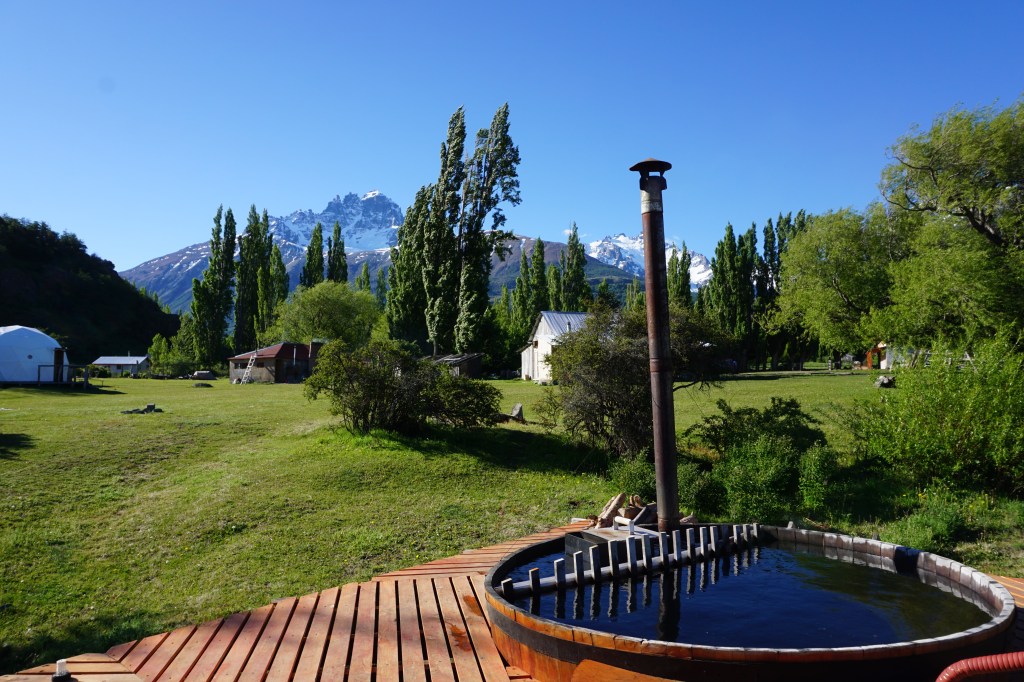
In Villa Cerro Castillo I stayed at camping Araucaria. In addition to a spacious campground they also have cabins, domes and a wood-fired hot-tub. Villa Cerro Castillo itself is a small village with some basic shops, accomodation and restaurants. On the „main“ road there is a restaurant in an old bus, which has decent sandwiches. Also seems like a good starting point for hiking and other excusions in the Cerro Castillo national park.
The camp ground was relatively empty, but I met two fellow cyclists: Arne, a dutch guy who started cycling in northern Chile and was planning to go all the way to Punta Arenas (if I remember correctly). The other one was Moritz, a swiss guy heading to Ushuaia. He also started in northern Chile and already crossed Canada from east to west before he came to Chile.
We did not cycle together, but should meet again later on the road. Moritz I also visited again about a year later in his newly opened Hostel in Santa Cruz. Highly recommended for anyone who likes wine, located in the Colchagua Valley only a two hours bus ride from Santiago de Chile.
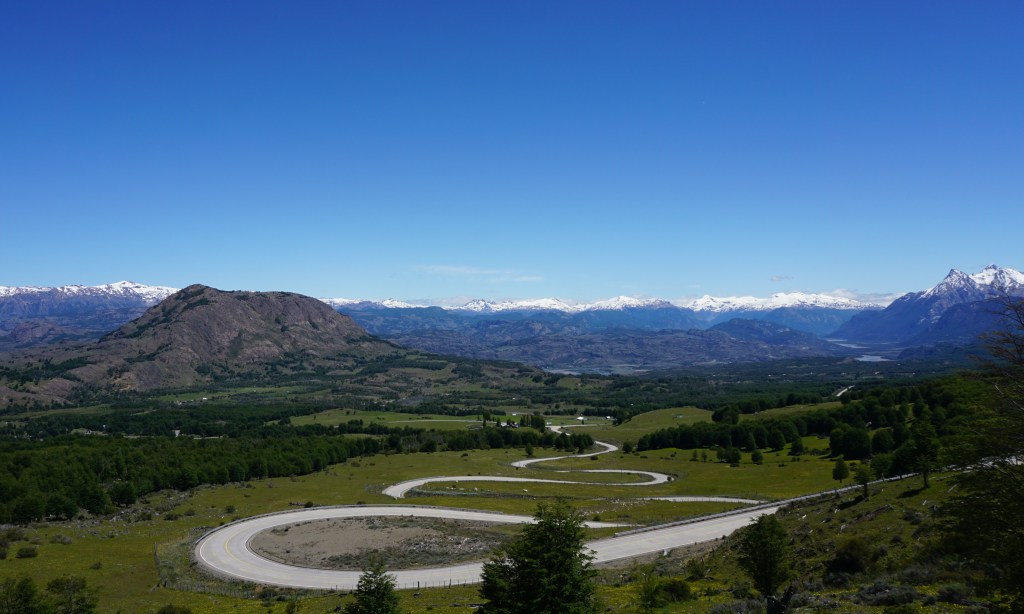
Day 3 (70 km, horrible gravel): Villa Cerro Castillo to wild camping at the Rio Murta
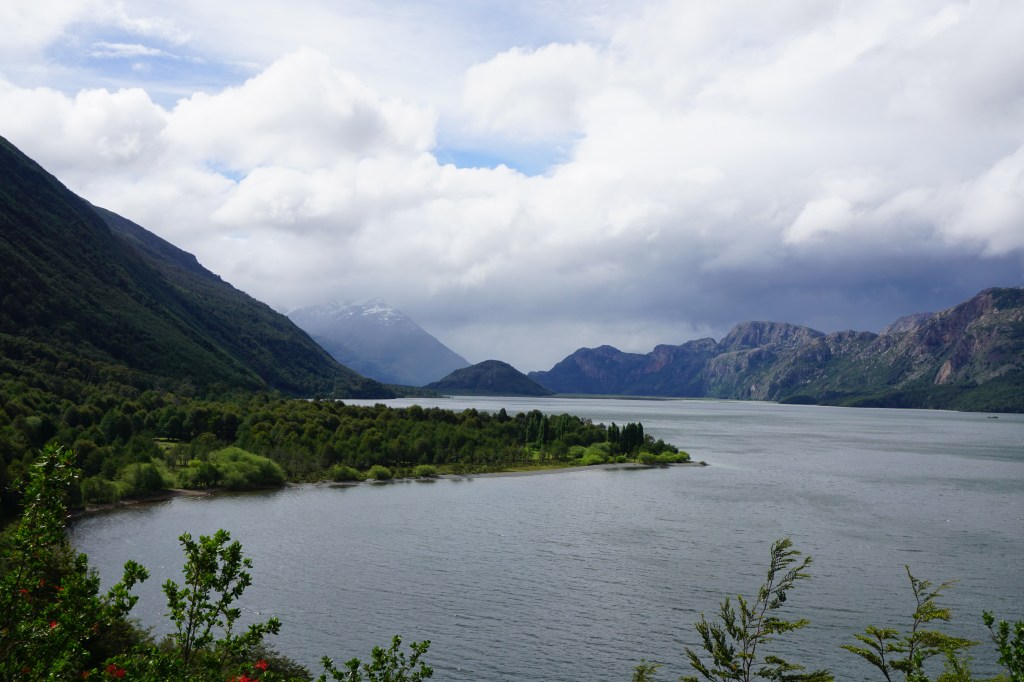
From Villa Cerro Castillo to next village, Puerto Rio Tranquillo, it is about 120 km, and since I wanted to take it easy, I decided to make an additional stop on the way and go for my first „wild camping“. Shortly after leaving the village there is an uphill section, with a great viw over the Rio Ibanez and the Cordillera Castillo as reward. Unfortunately, there must have been some roadworks (which on the Carretera Austral basically means putting new gravel on the road) not too long ago and the road surface was very loose gravel with tennis ball sized stones. As a result, the riding was very slow and not much fun, but the views along the road more than made up for it. I also toppled over twice on uphill sections while going around 8 km/h. Nothing happened since I just jumped of the bike, but the eggs I took for breakfast didnt make it.
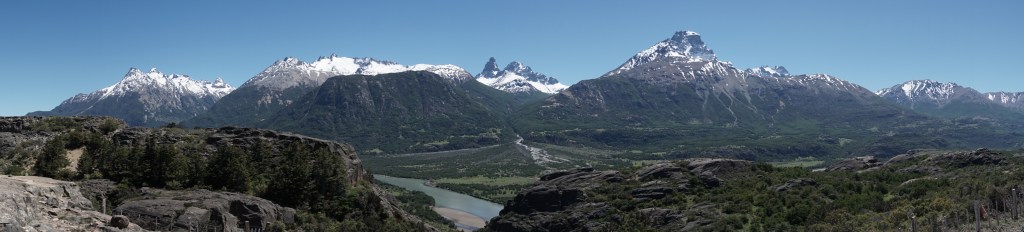
After the uphill section the road passes by Lago Verde (which actually looks green) and then goes down to and along the Rio Ibanez for some time, passing by the Bosque Muerto. This „dead forrest“ is the result of an eruption of the volcano Hudson in 1991.
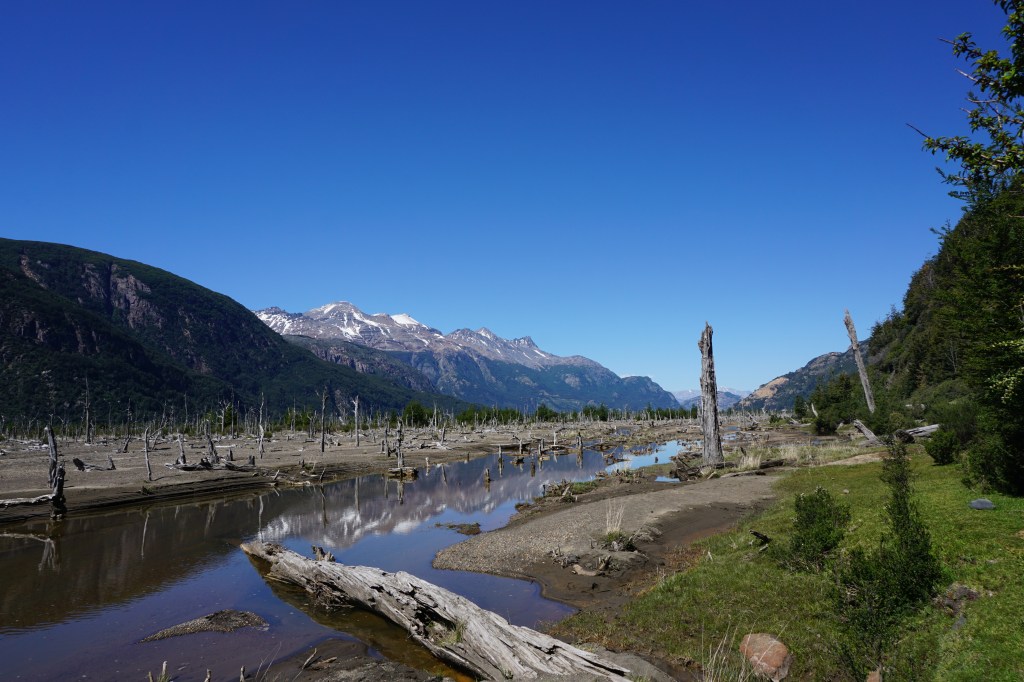
Shortly after the Bosque Muerto the road takes a left turn away from the river, followed by a up and down section untill it goes down again after another turn left to the Rio Murta. When the road turned left again I had cycled a bit more than half of the way to Puerto Rio Tranquillo, so I started looking for a spot to camp and found a place a few kilometers later when the road was going along the Rio Murta. Although quite close to the road, my camping spot was separated by a line of trees and next to a small (very cold) river, which was joining the Rio Murta.
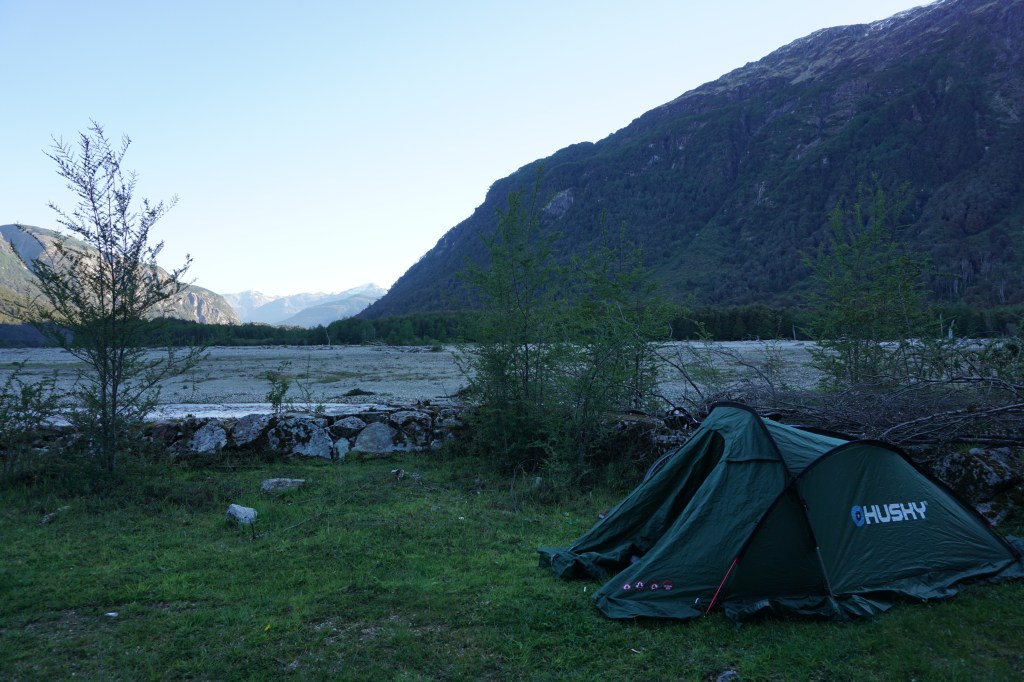
Day 4 (50 km, washboard gravel): Rio Murta to Puerto Rio Tranquilo
On the next day I cycled the remaining 50 km to Puerto Rio Tranquilo. The road continued to be gravel, with quality changing between bad, very bad and horrible washboard. But at least it was mostly flat going along the Rio Murta and again with great views along the way.

The Rio Murta flow into the Lago General Carrera, one of the largest lakes in Patagonia, so the last section before reaching Puerto Rio Tranquillo runs along the lake with, again, great views.
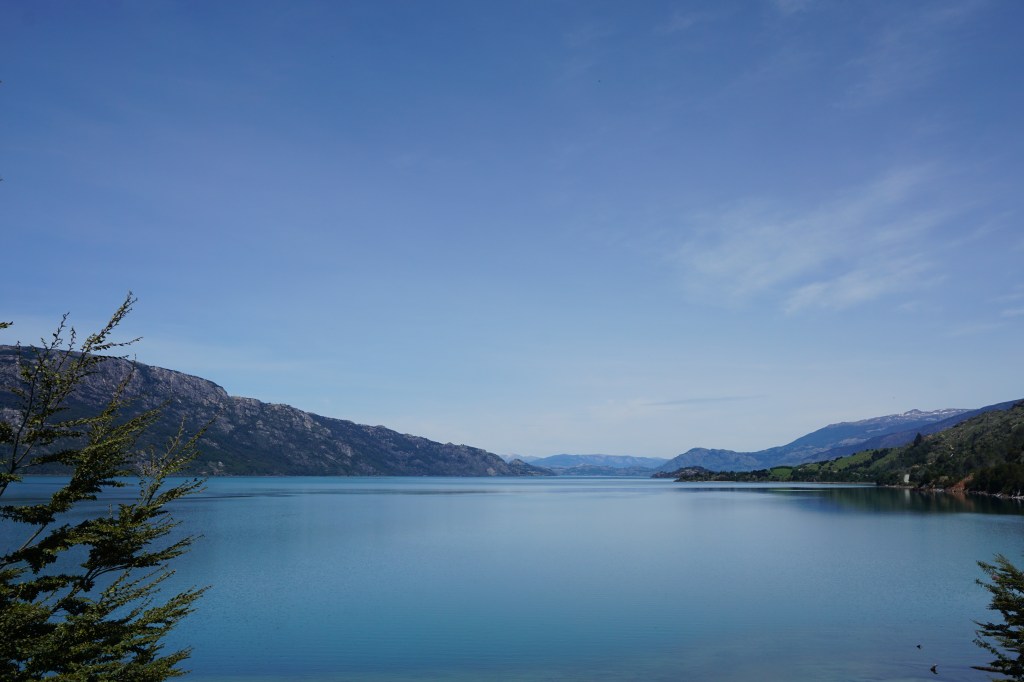
Day 5: Rest day in Puerto Rio Tranquilo
After four days in the saddle and three nights of camping I decided it is time to take a rest (and a warm shower), so I stayed at a hostel for two nights. Puerto Rio Tranquillo itself is a small village, but also buzzing tourist hub (compared to other villages along the Carretera Austral). It is most know for the „Marble Caves“ at the lake and there are various possibilities for excursions around the area, including hiking on the Glaciar Exploradores. Since I wanted to do a rest day I decided to just go for a short boat trip to the Marble Caves, what I can definitely recommend. The lake has a turquoise color and, if you take the morning trip, the sun reflections in the caves are really nice. But only if you are lucky with the weather, which I was as I learned later. On the boat I also met a Korean couple, who started started their trip about a year ago in Seattle and were heading to Ushuaia.
In hindsight I should have maybe stayed a day longer for a trip to the glacier, which I heard later is definitely worth. It is not as overrun as more famous glaciers like the Perito Moreno glacier in Argentinia and an excursion including hiking on the glacier is relatively cheap (in 2016).
For beers I can recommend the Cerveceria Rio Tranquilo, located on the main road. They make their own, quite good beer (Cerveza Arisca). Also, the owner looks like Gustavo Fring.
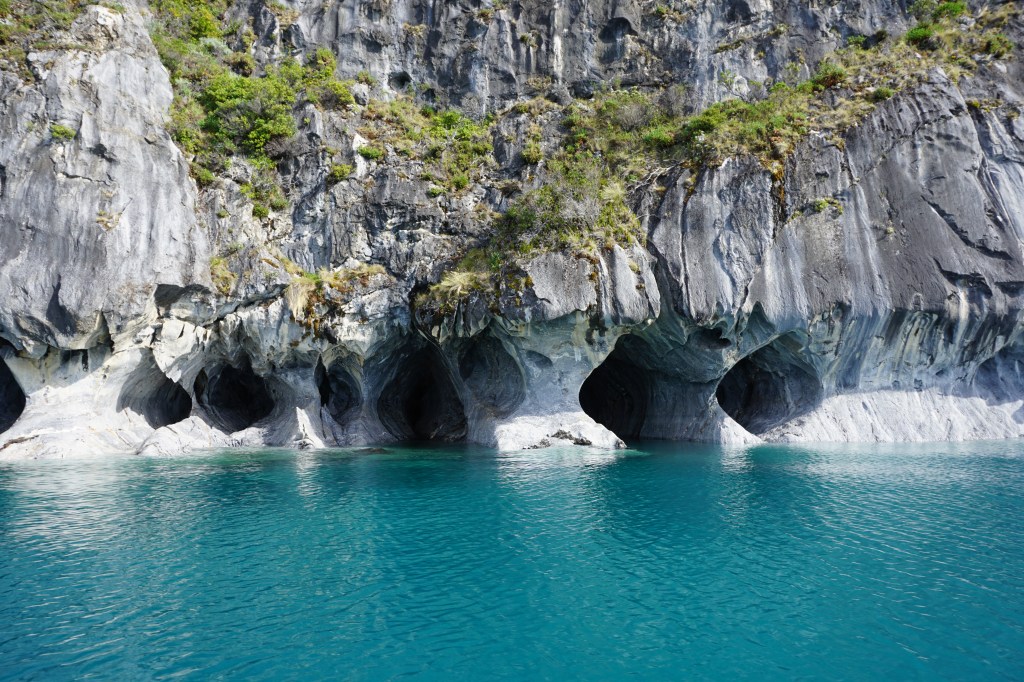
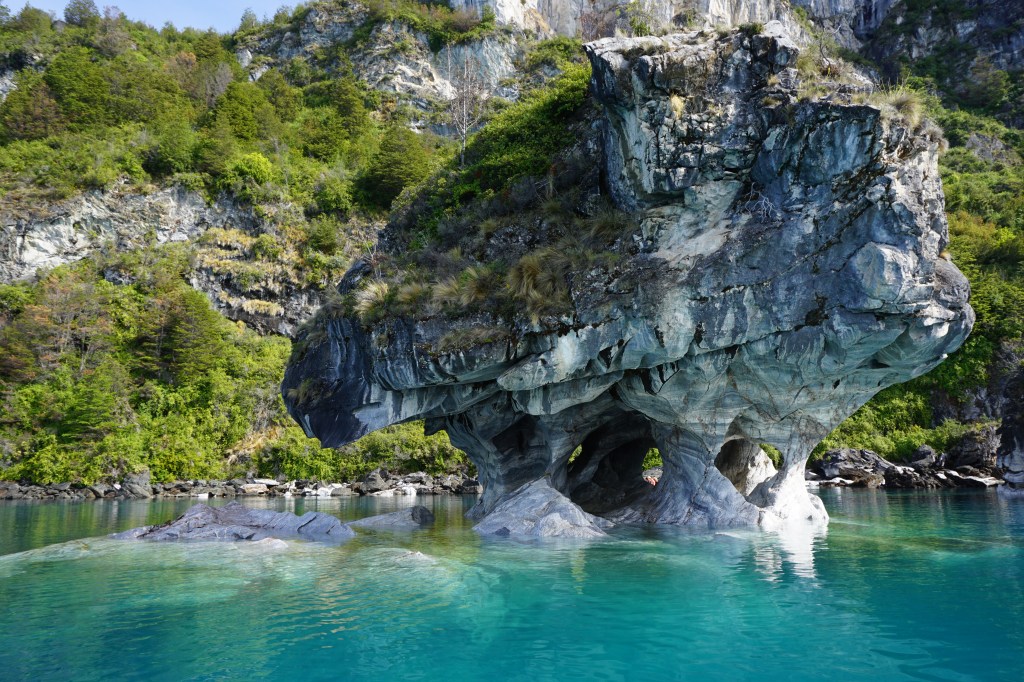
Day 6 (65 km, gravel): Puerto Rio Tranquilo to Puerto Bertrand
After the rest day I rode 65 km to the next village, Puerto Bertrand. The first 50 km or so were along the lake with a bit of up and down. Interestingly, the color of the lake changed at some point from turquoise to a more normal blue.
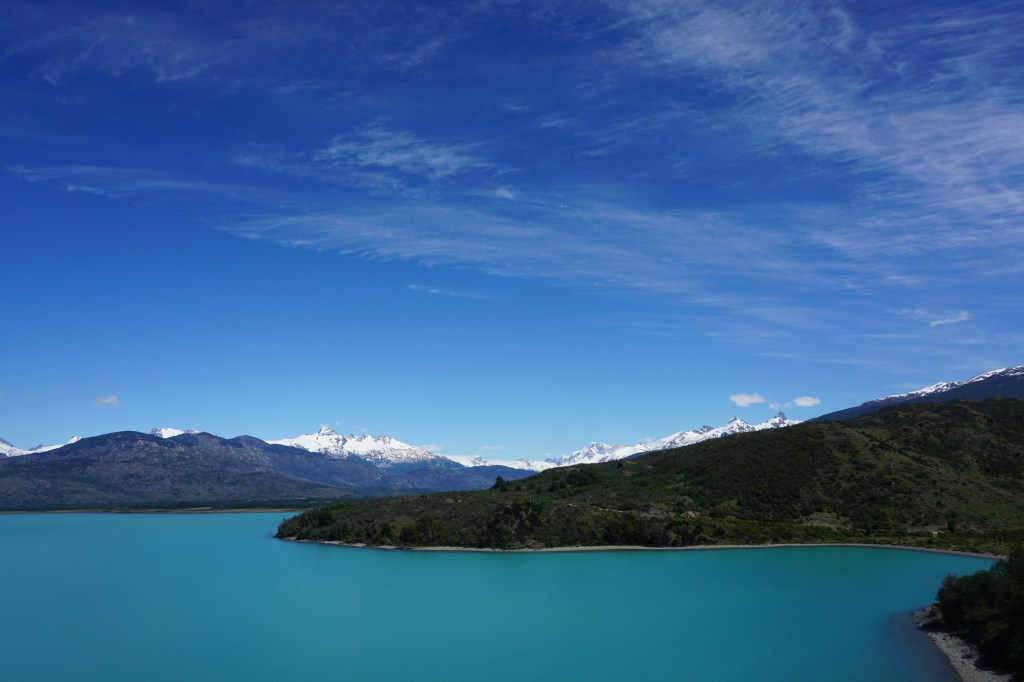
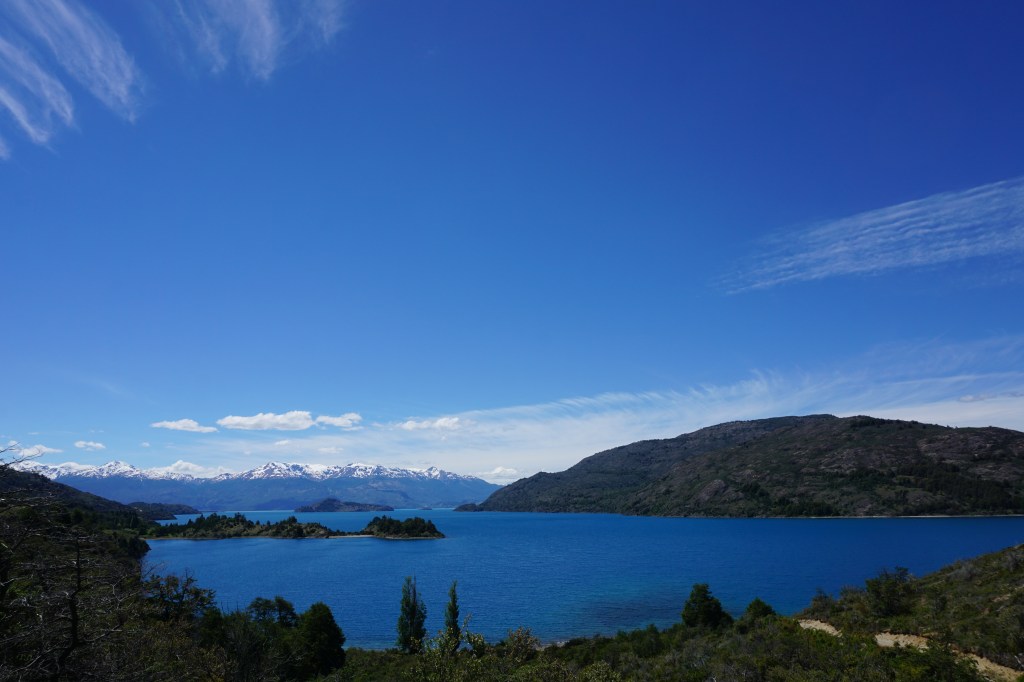
Shortly after reaching the end of the lake, there is one of the very few road crossings, where you can take a left turn heading towards Argentinia. On the remaining 300 km to Villa O’Higgins there is only one more turn to Argentinia, if you have a car. With a bike it is possible to continue, but more on that later.
In Puerto Bertrand, a very small village on the Rio Baker, I ended up staying in quite a big cabana by myself, although I just asked (and paid) for a single room. The village itself is very small with only a few options for accomodation and I found one grocery shop. But apparently there are great spots for fly fishing.
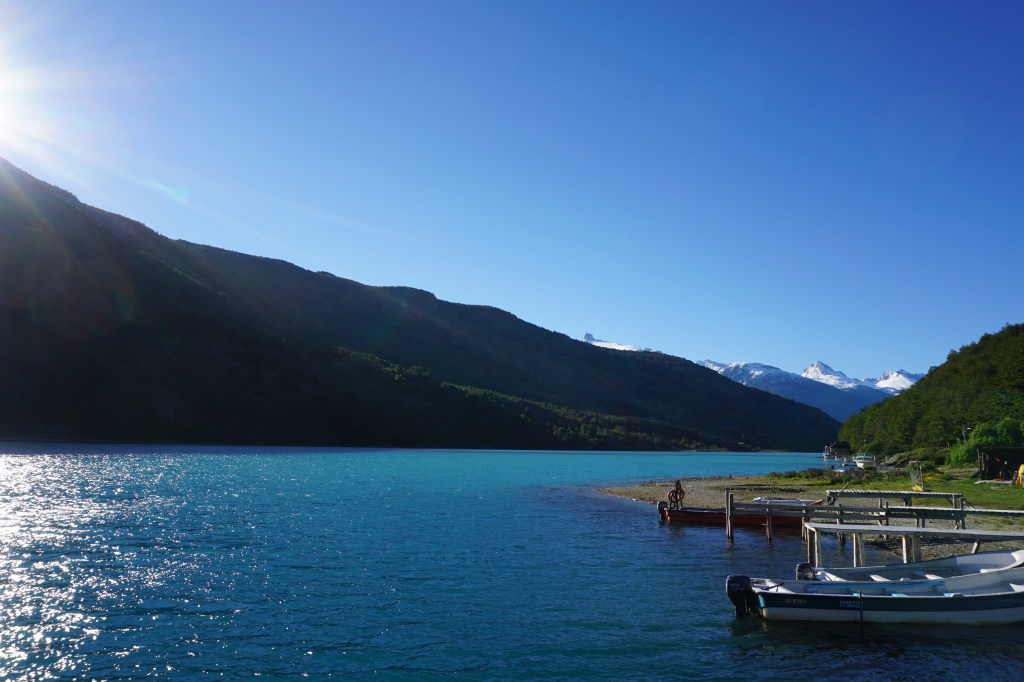
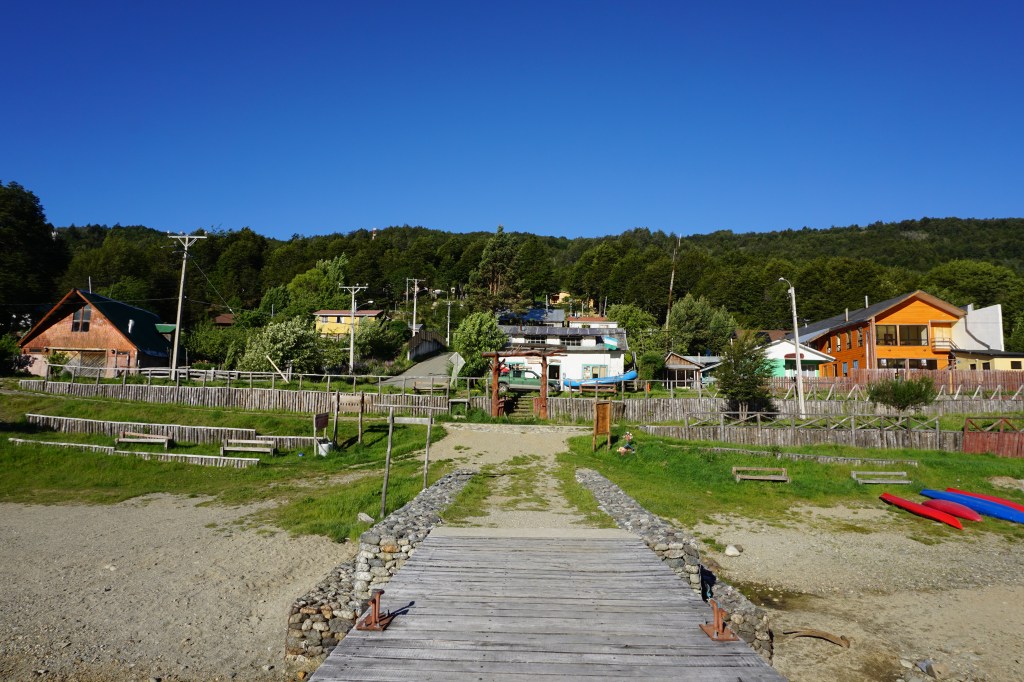
Day 7 (50 km, good gravel): Puerto Bertrand to Cochrane
Cochrane is the largest town on the southern part of the Carretera Austral with about 4000 inhabitants (so not really a big) and about 50 km from Puerto Bertrand. The road losely follows the Rio Baker, but with some up and down closer to Cochrane. The first section is still mostly flat and after a bit more 10 km reaches the estuary of the Rio Nef and Rio Baker (about 2 km walk from the road).
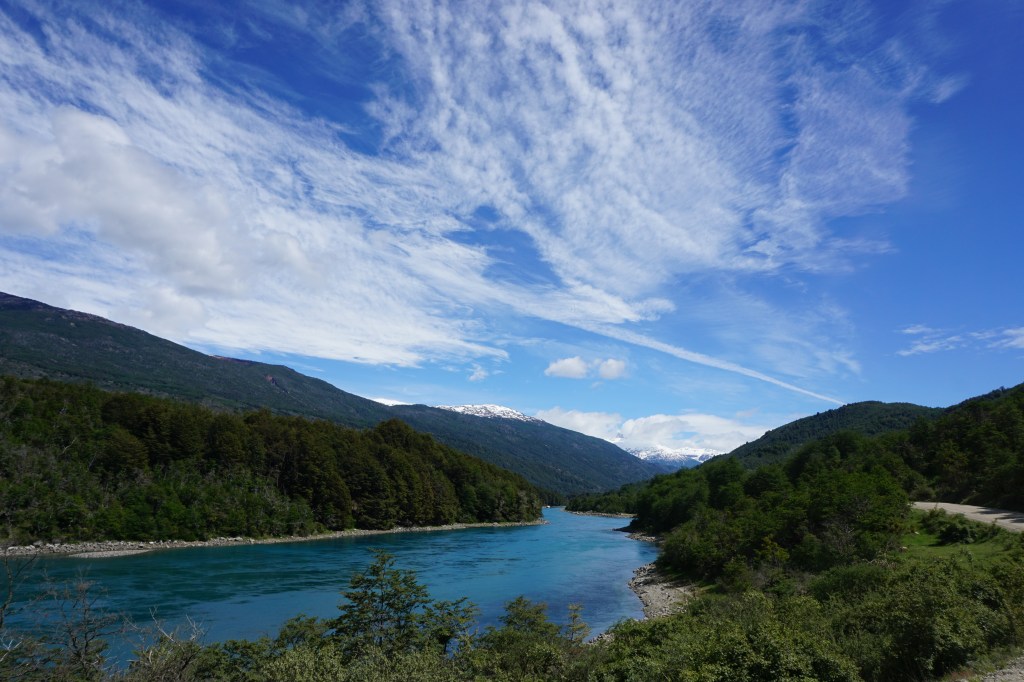
Another 10 km later there is the last exit from the Carretera Austral towards Argentinia over the Passo Rodolfo Roballos. The remaining 250 km to Villa O’Higgins are then basically a dead end (for cars). The remaing 30 km to Cochrane are quite a bit up and down, but on relatively good gravel, meaning no washboard.
Cochrane itself is a quiet town and almost „big“ compared to the other villages on the southern part of the Carretera Austral. There are several hostels, hotels and camping, grocery shops, restaurants and even an ATM (in 2016 the only one south of Balmaceda). Since it was a short ride I arrived quite early and used the day to stock up on supplies and spend the rest of the at the „Tehuelche Brew Pub“, since the beer (and food) was quite good. There also met another fellow bikepacker: Hannah, a forest-firefighter from Colorado. We did not cycle together, but should meet again later down the road.
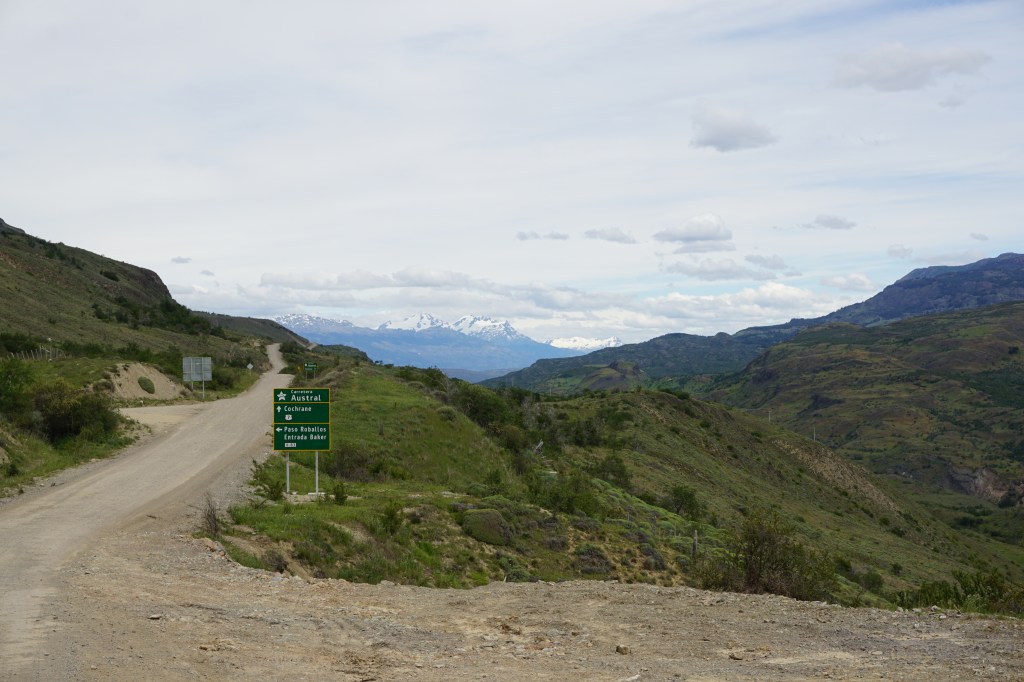
Day 8 (95 km, gravel): Cochrane to wild camping at Rio Cochrane
The next destination after Cochrane was Caleta Tortel, which is about 125 km from Cochrane. I did not want to do that in one day, so my plan was to ride at least half the distance and then look for a nice spot to camp. The cycling was a bit up and down with partially a lot of washboard, but very scenic passing by several lakes and riding along some rivers. And while writing this I realize that this describes most parts of the the tour so far…
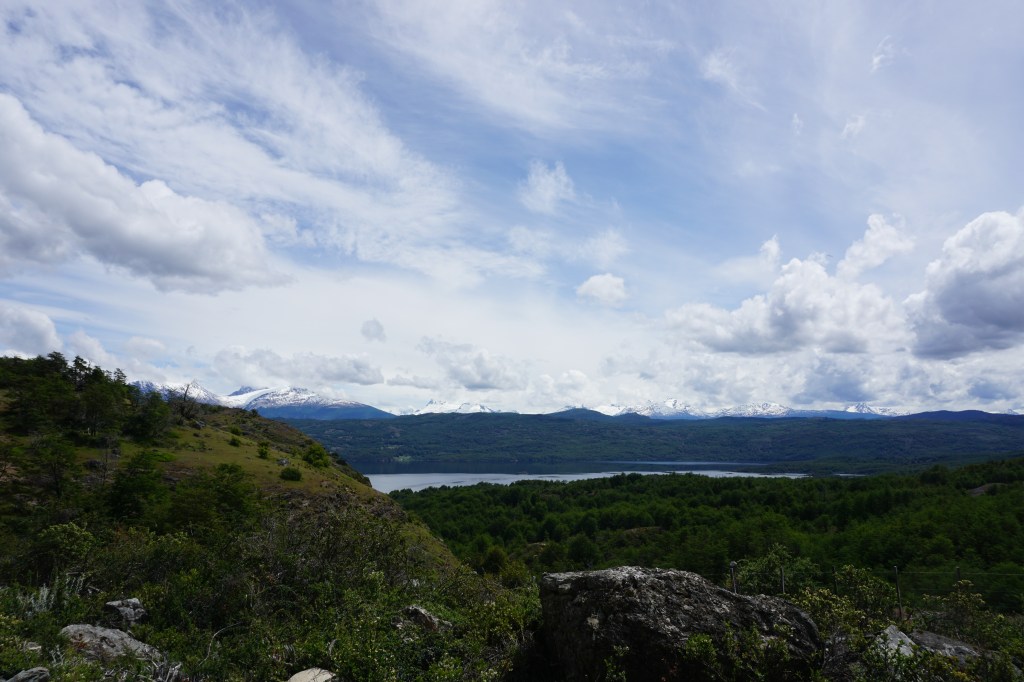
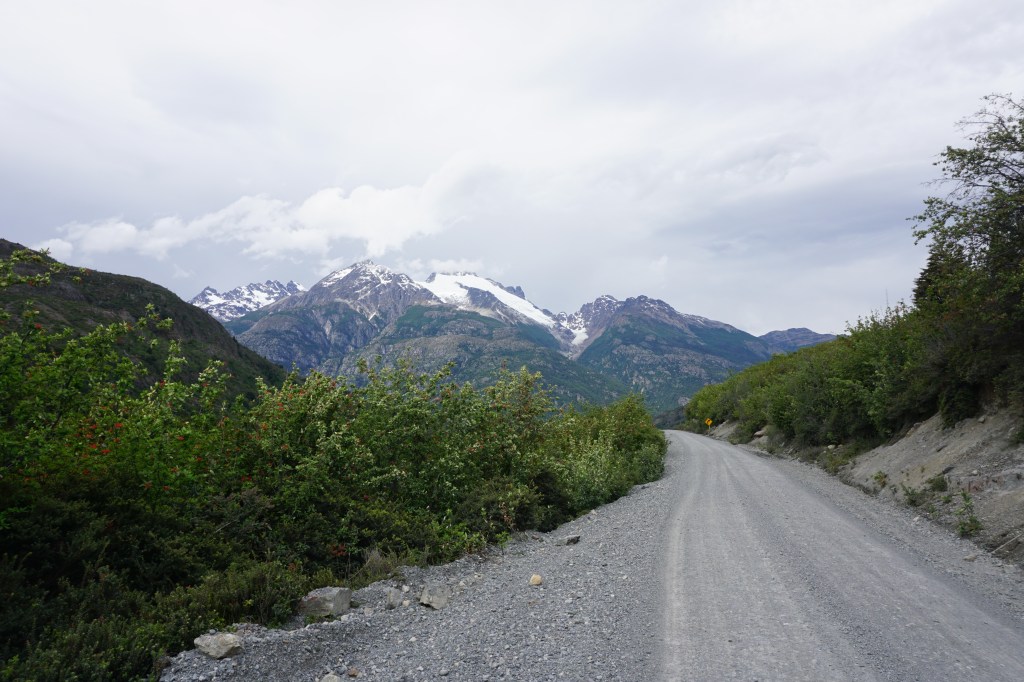
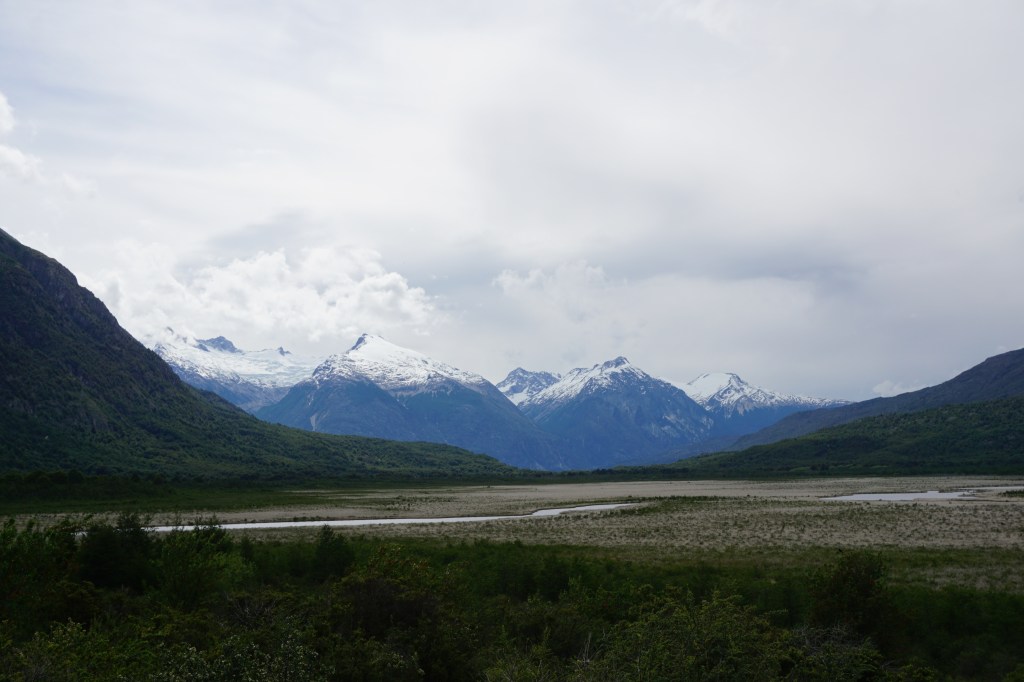
In the end this turned out to be my longest day in the saddle with about 95 km. This was a bit longer then planned and I got quite tired in the end, but the camping spot I found at the Rio Cochrane was definately worth it. Also, as you can see on the pictures, there was no clear-blue sky anymore and during the night it started raining a bit. Fortunately, in the morning there was enough sun to dry the tent again.
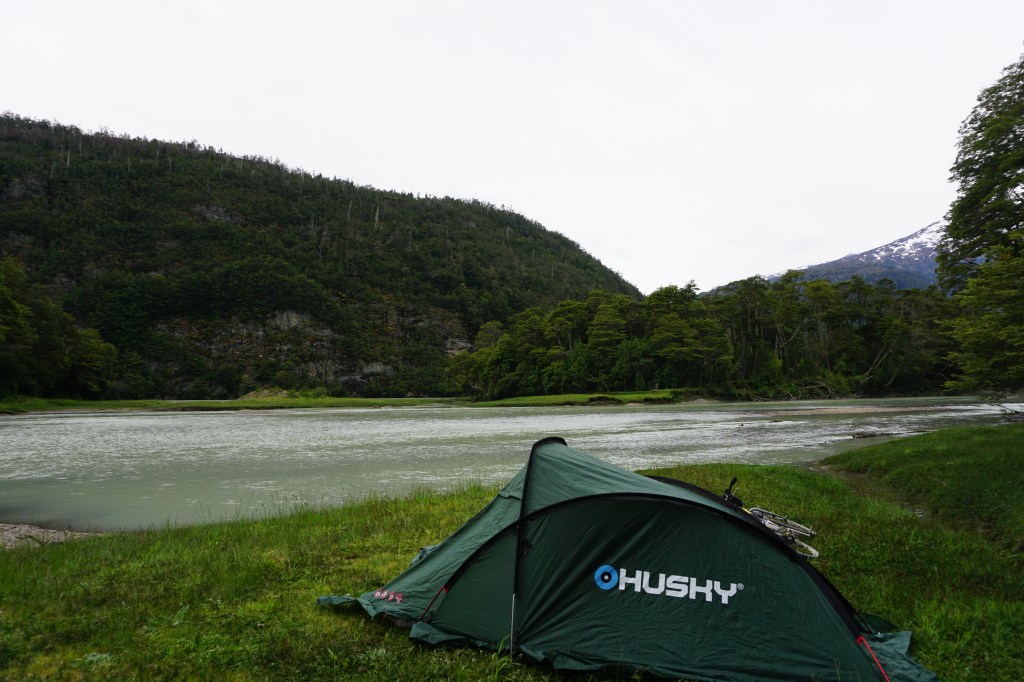
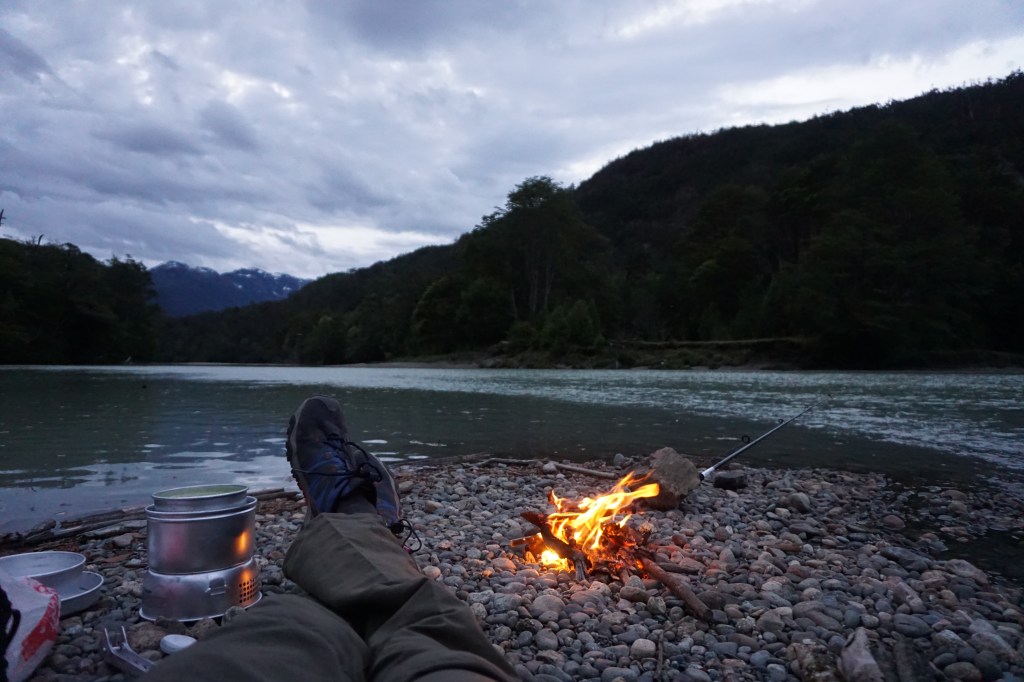
Day 9 (30 km, washboard gravel): wild camping at Rio Baker to Caleta Tortel
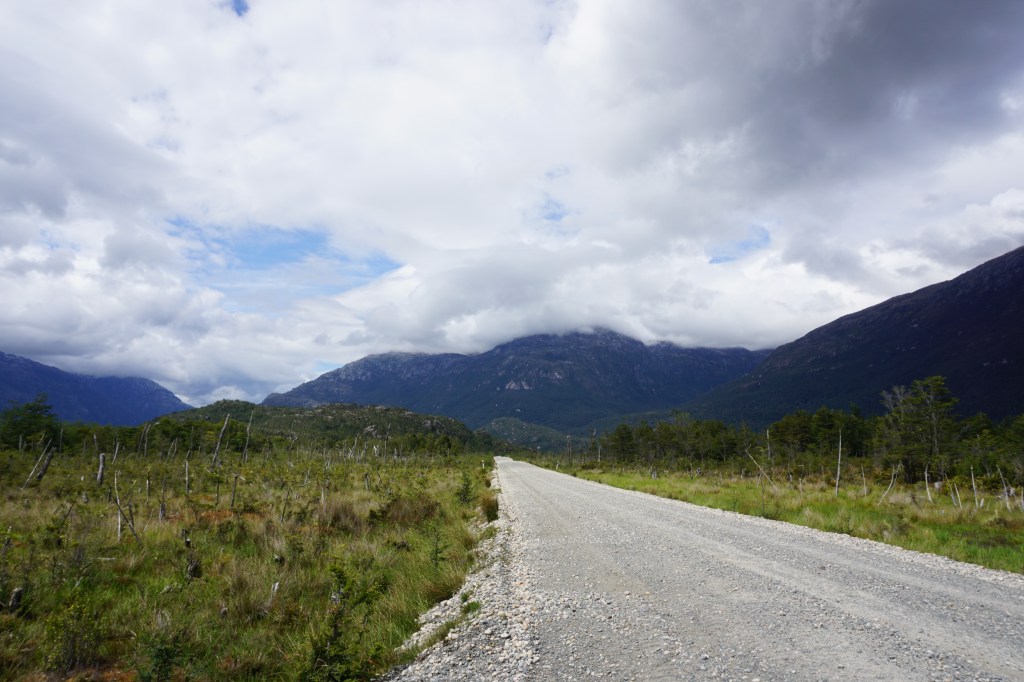
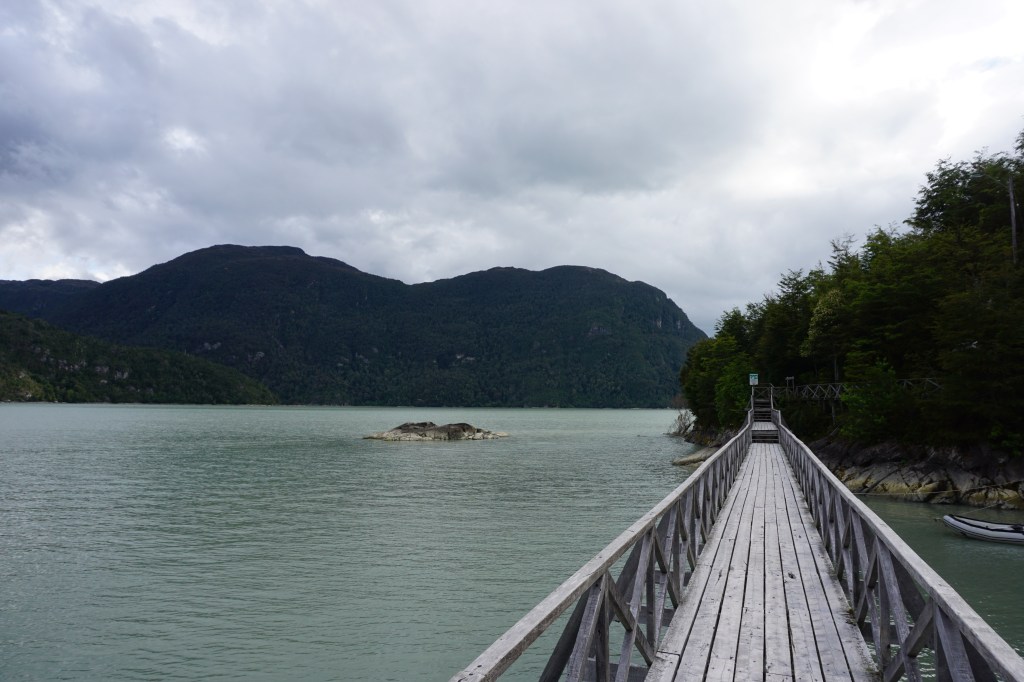
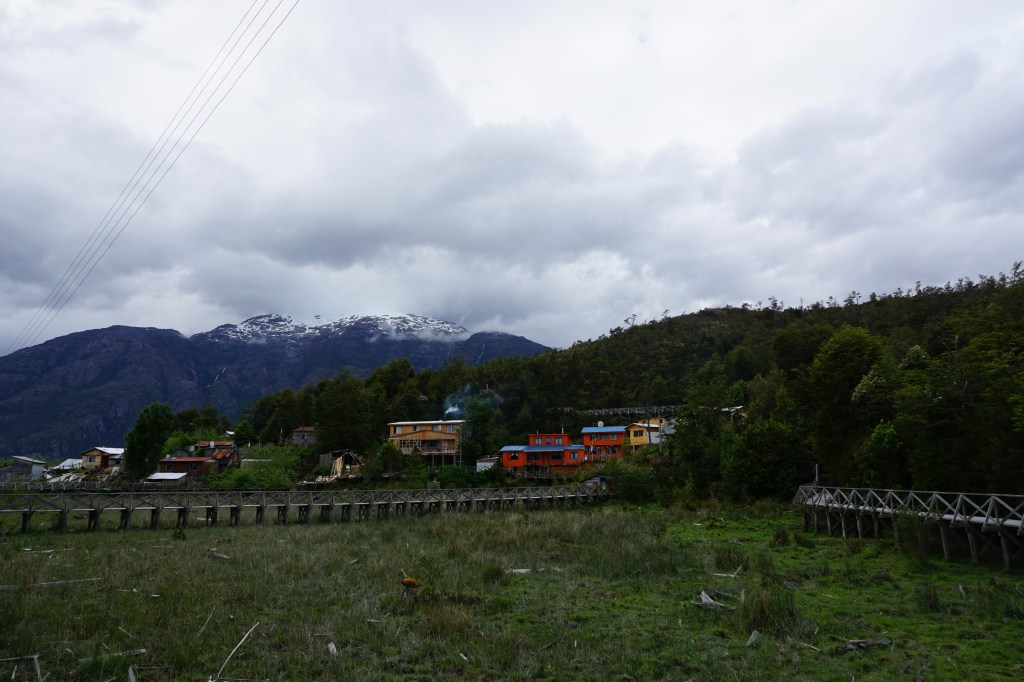
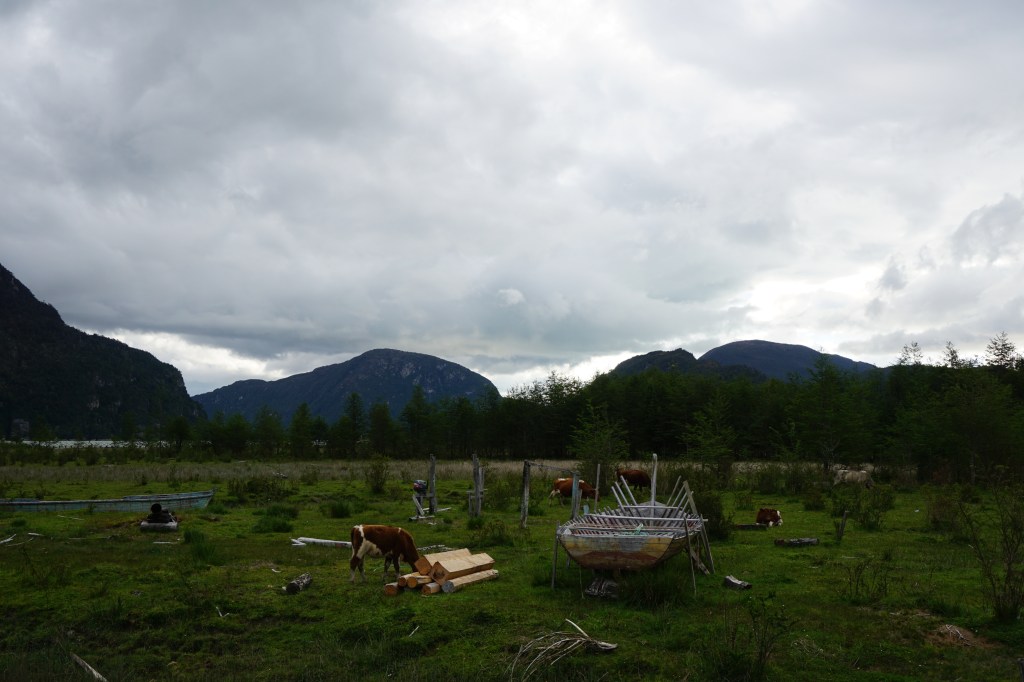
Since I cycled a bit longer the day before, this was a short day with only 30 km to Caleta Tortel, which is a small detour of about 20 one way from the Carretera Austral. The remaining section was mostly flat, but with a lot of washboard gravel and headwind, so it took more than very annoying 2h. Caleta Tortel is a picturesque small village in a steep bay with building on the hillside and many walkways on stilts and definetely worth the detour. I stayed in a hostel adjacent to the stairs on the way down with a nice view over the bay area.
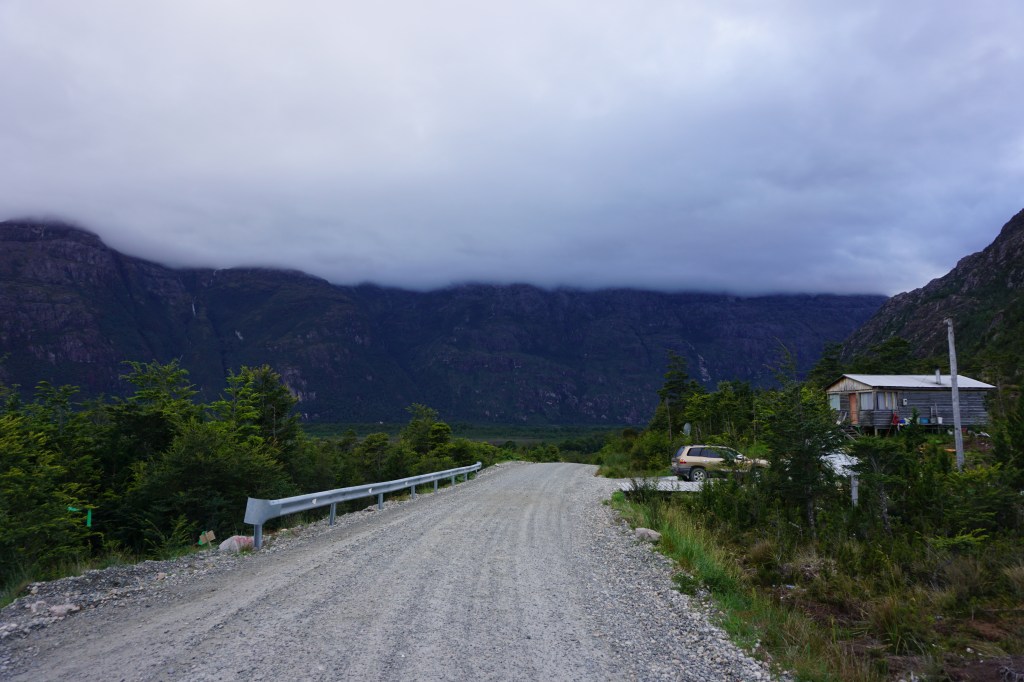
After I arrived in Tortel I was first walking around a bit and when it got late I started looking for a place to eat, which turned out to be harder then expected. While walking around I saw a few places, which looked like restaurants, but when I went there it turned out that most of them were closed, because it was still off-season. Luckily, I found something a bit up the hill by going to one of the few houses, which had lights on. They seemed a bit surprised that by me coming, but I got a surprisingly good dinner (and cold beer) in the end. Initially I planned to do another rest day in Tortal, but with everything closed and since I had explored most of the stilt ways already I decided to continue next morning.

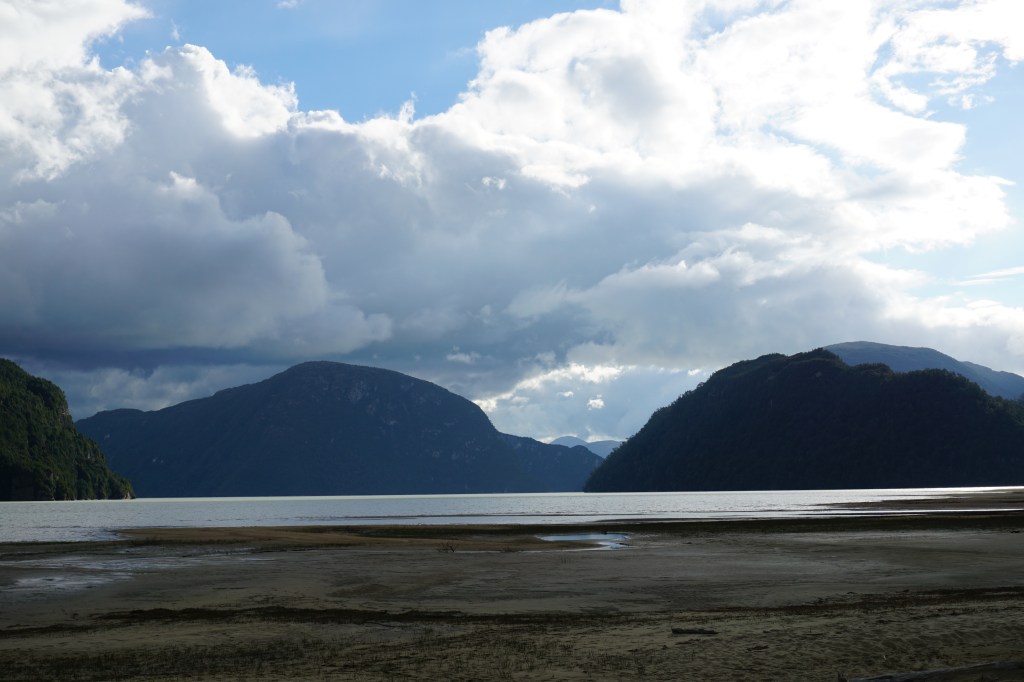
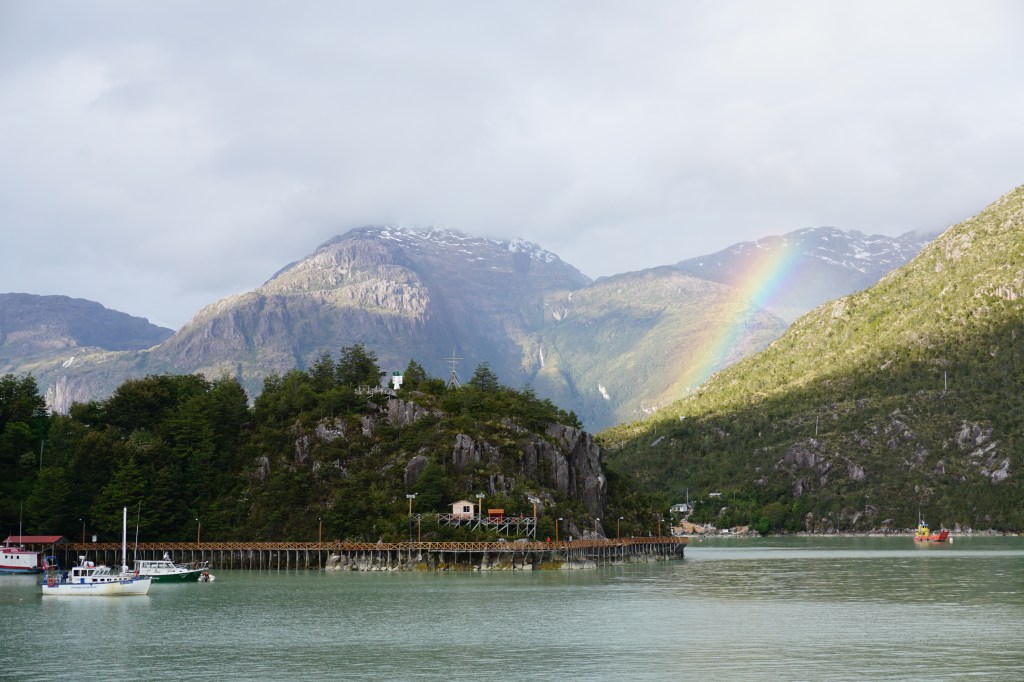
Day 10 (60 km, hilly gravel): Caleta Tortel to ferry ride to wild camping at Rio Ano Nuevo
After Caleta Tortel the next village is already the last one on the Carretera Austral, Villa O’Higgins. The distance is about 140 km, so I decided to do it in two days with wild camping in between. This last section also involved a short ferry trip (for free) starting in Caleta Yungay, which is about 40 km from Caleta Tortel. There were I think 2 rides per day, at 12:00 and 18:00. Since I wanted to cycle a bit afterwards, so that I dont have to do 100 km the next day, I decided to get the ferry at 12:00. With 40 km to cycle, including a big climb, this meant getting up and starting early. I started around 7:30 and took almost 4h to get to the ferry. This was also the first day riding in the rain and it was getting quite cold, so I was happy to see a place selling coffee next to the ferry departure. There one coffee turned into three, because the ferry was not exactly on time. While waiting, I met couple from Slovenia and also Hannah again (the American I met in Cochrane). Turned out she rode from Cochrane to Tortel in one day, but then took a rest day. After the ferry we cycled together for another 20 km or so until we found a nice spot for camping next to the Rio Ano Nuevo. Later it started raining quite a bit, but fortunately after we set up the tents.
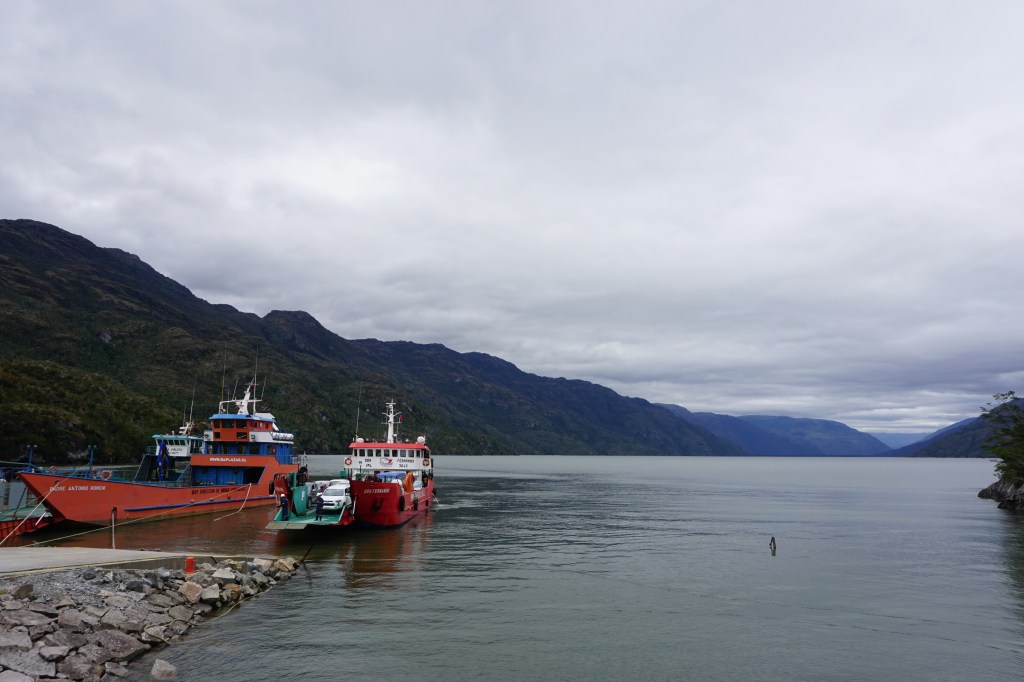
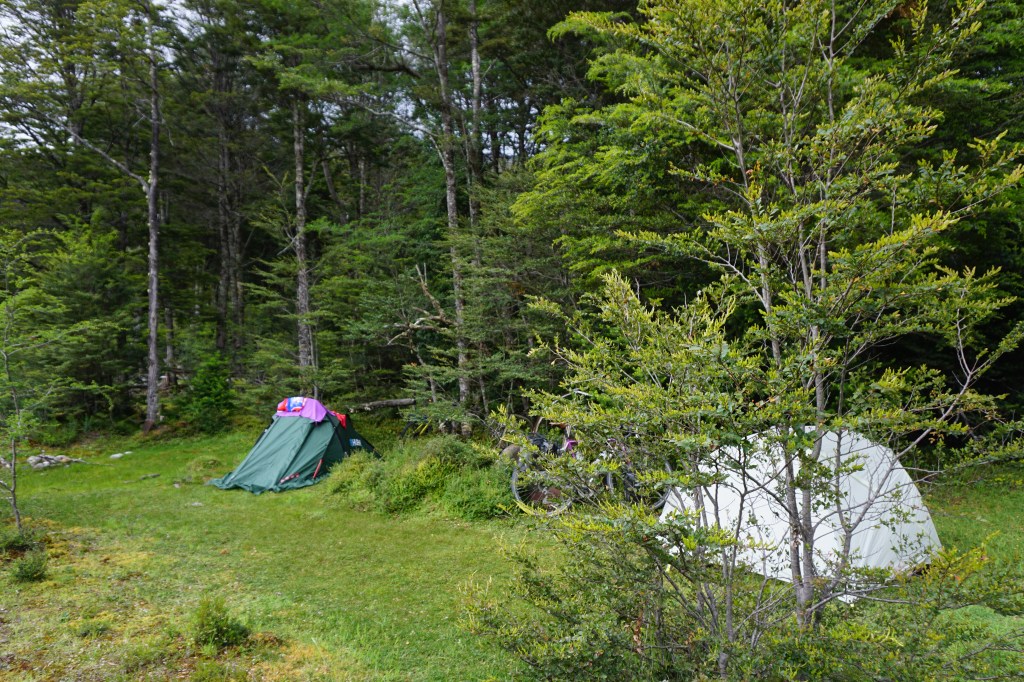
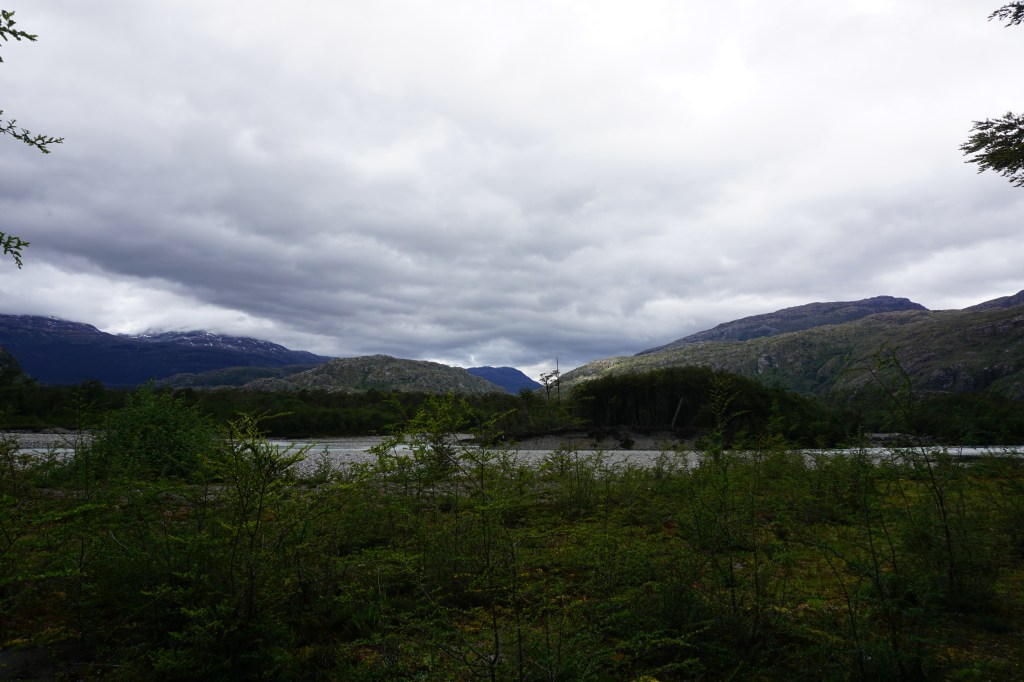
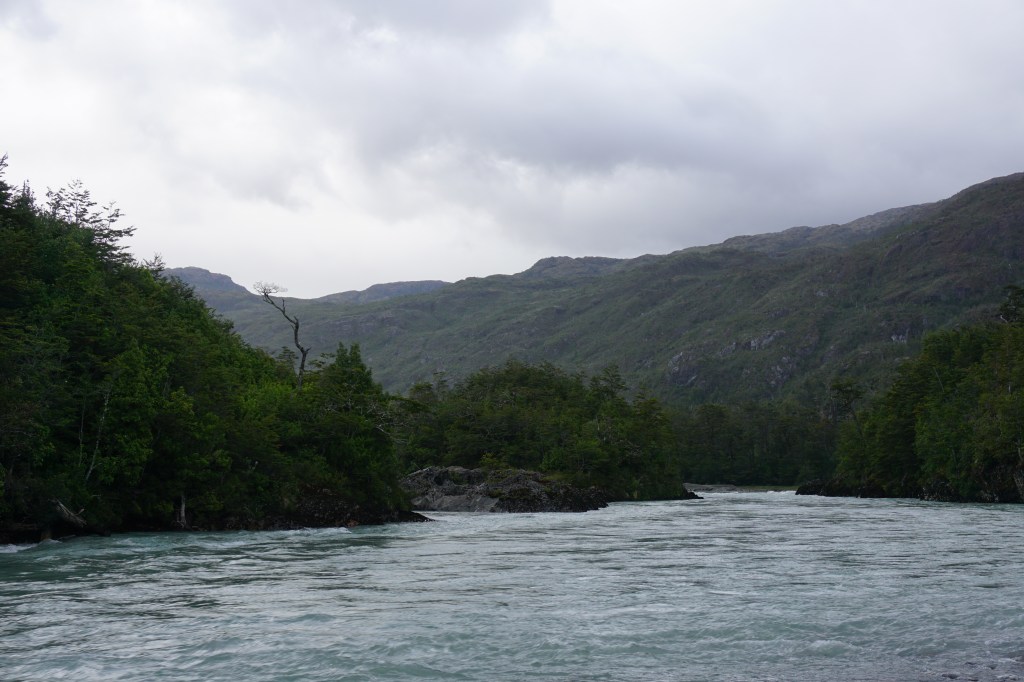
Day 11 (80 km, gravel): wild camping at Rio Ano Nuevo to Villa O’Higgins
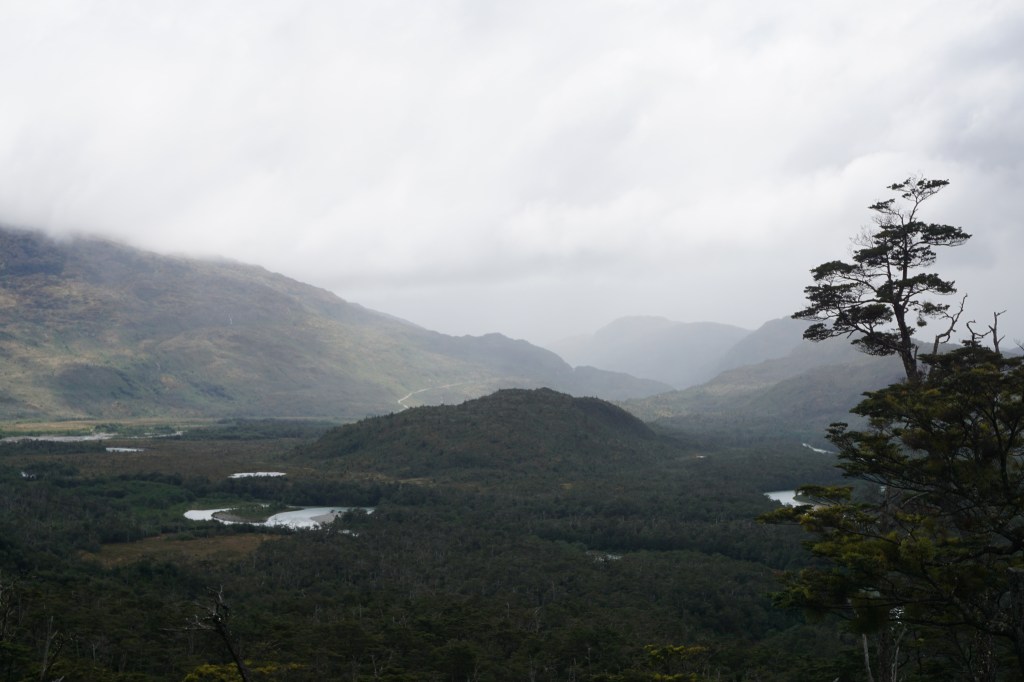
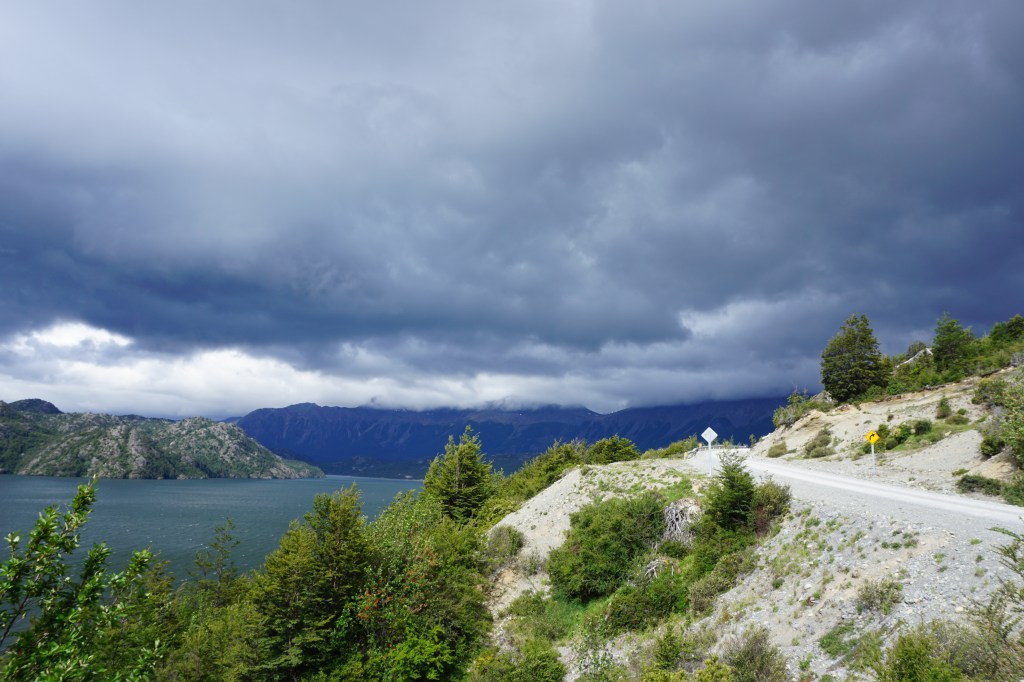
The last longer day of riding was also the most rainy one, but at least the scenery was great. Again. So basically like all the way. Hannah started very early (and I dont like to get up early), but we met again in Villa O’Higgins, where we ended up staying at the same hostel. The ride was a lot of up and down, passing by several lakes and rivers.

Days 12-14: stuck in Villa O’Higgins
In Villa O’Higgins I stayed in the hostel „El Mosco“, which is on the left a bit before the center. They have lots of space for camping as well, dorm rooms and single rooms upstairs. If you are not on a budget I can recommend the single rooms, which have a nice living room with fireplace to relax and a breakfast included. I think the living room is not open for campers/dorm rooms, because it would get too crowded.
Shortly after arriving I also met Moritz again (the swiss guy I met at the beginning of the trip), who was about to get the boat to continue to Argentina the next day. I wanted to take a rest day and decided not to join him, which then turned into four nights in Villa O’Higgins, because there was no boat leaving the next days. There is no real schedule for the boats. If a boat is leaving depends on enough people wanting to go (in the main season this is turns into enough places on the boat) and the weather as it can get very windy. So when you do this trip expect to be stuck in Villa O’Higgins for a few days. But in the end I had three relaxing days, went a bit hiking and fishing and met a lot of nice people at the hostel.
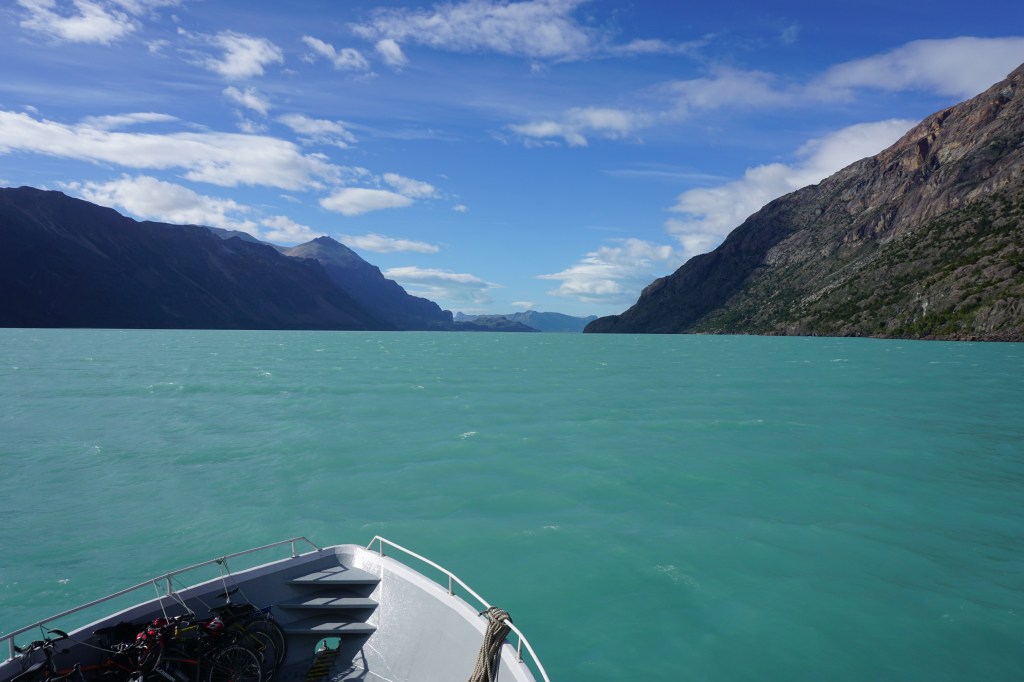
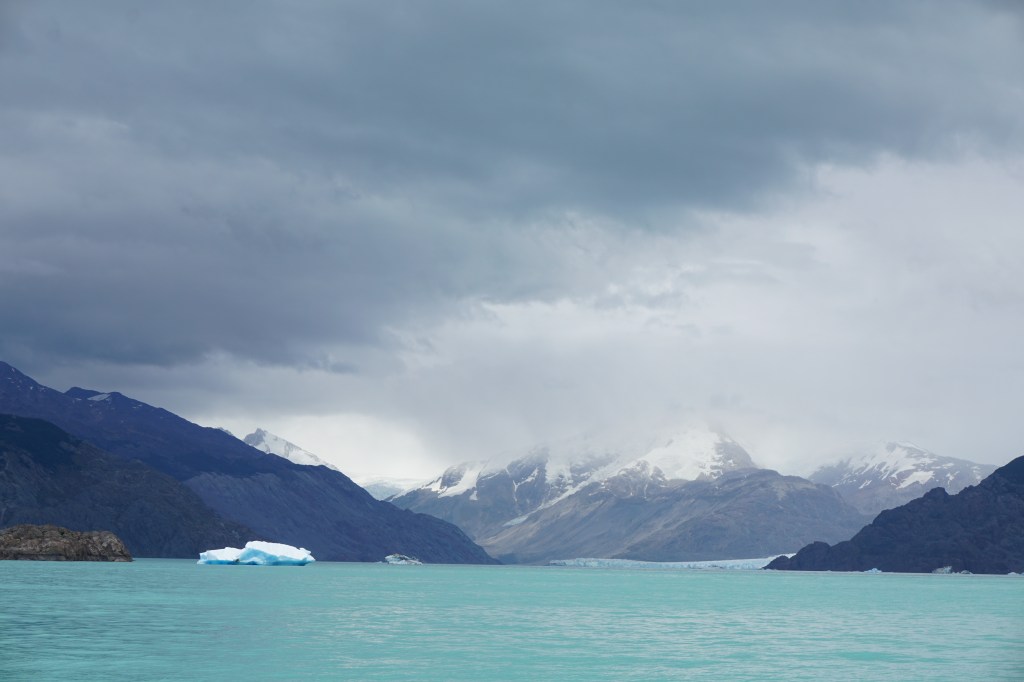
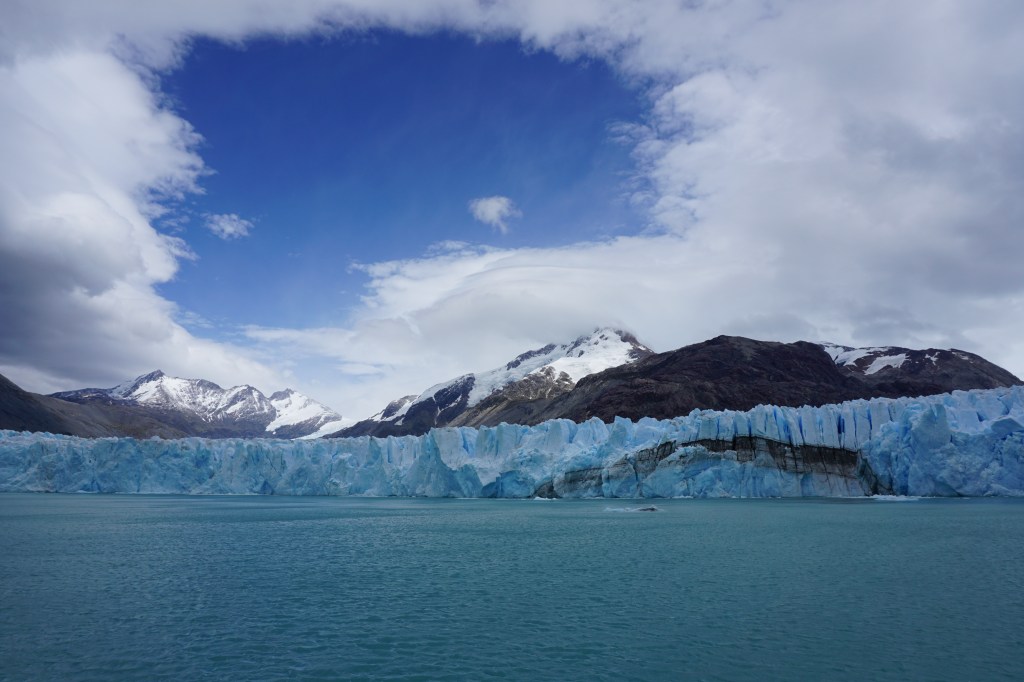
Then to boat ride: there are two options, one is to go directly to Candellario Mansillo, or you can chose to take a detour to the O’Higgins glacier. I went to the glacier and would recommend to go. It may not be as big as e.g. the Perito Moreno in Argentina, but definately worth it and relatively cheap, if you want to cross anyway.
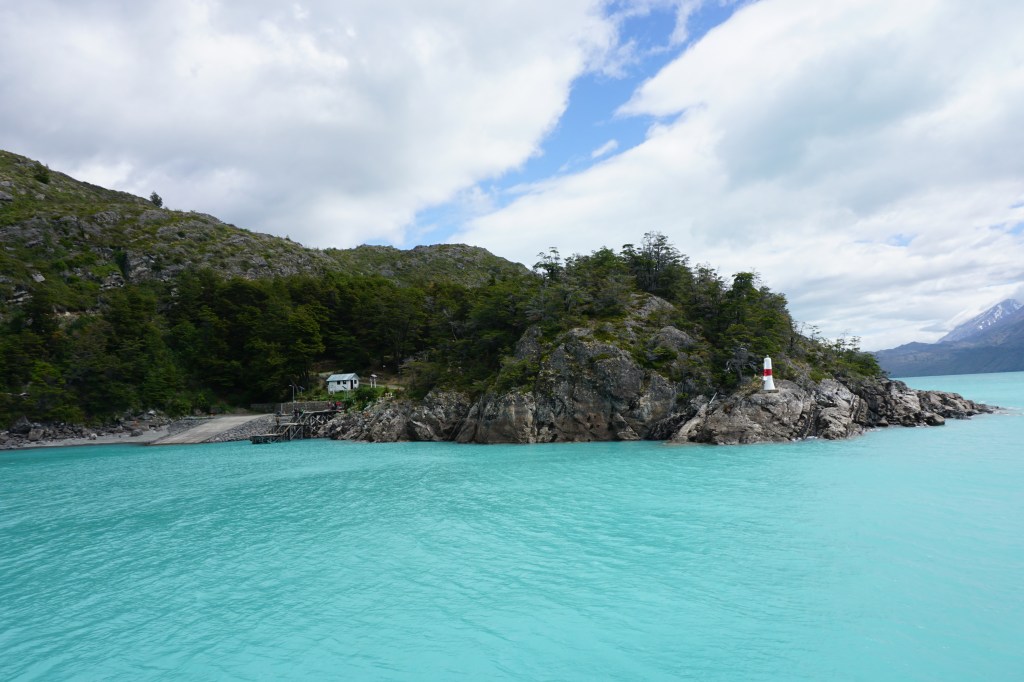
Day 15 (20 km, lots of single trail and pushing): Candellario Mansillo to Lago del Desierto
After getting of the boat there is the chilenean border control, the argentinian border control at the Lago del Desierto is about 20 km away. After the 20 km you have to take a boat again on the argentinian side, so you have to camp one night. There are camping spots close to both border controls, but you cant get food anywhere. Even though it is only about 20 km, it takes at least 3h or more. When I arrived at the Lago del Desierto it started to get dark already, so keep that in mind if you take the glacier detour and start late. The first section of the ride is steep uphill, followed by a few somewhat flat kilometers, which turns into a single trail eventually. I was riding with Hannah and after a few kilometers the chilenean carabineros from the border control passed by with on a tractor and trailer on their way to get firewood and they gave us a ride with the bikes on the trailer for a few kilometers. On the single trail part, which more or less start after crossing the „official“ border (a sign in the middle of the forrest) I had to push a the bike a lot and some sections were more like a very narrow riverbed and not really a trail.
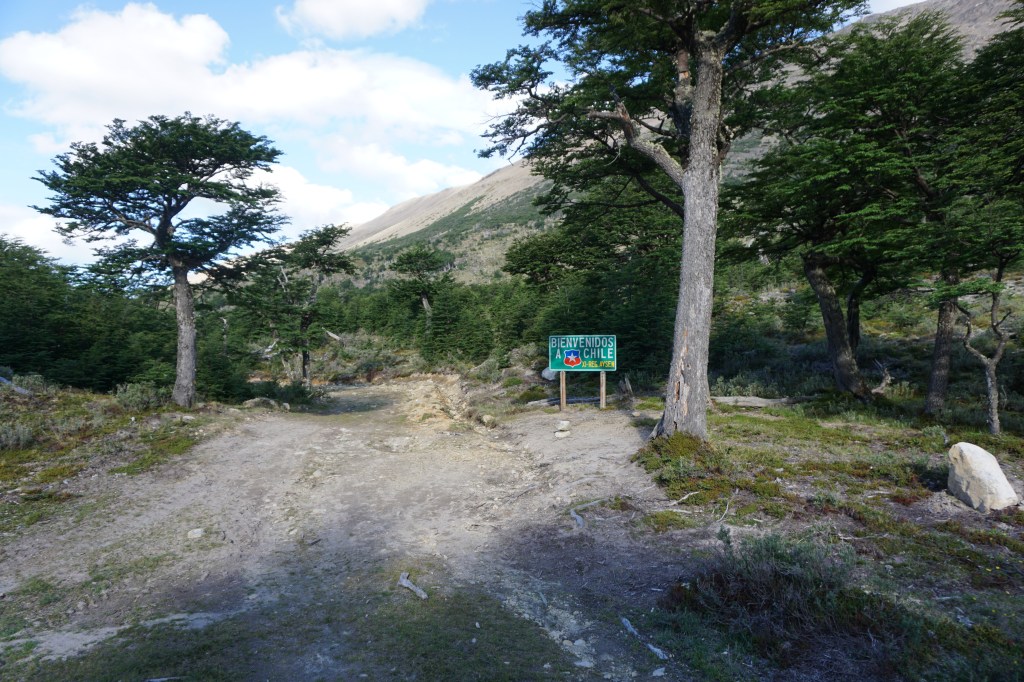
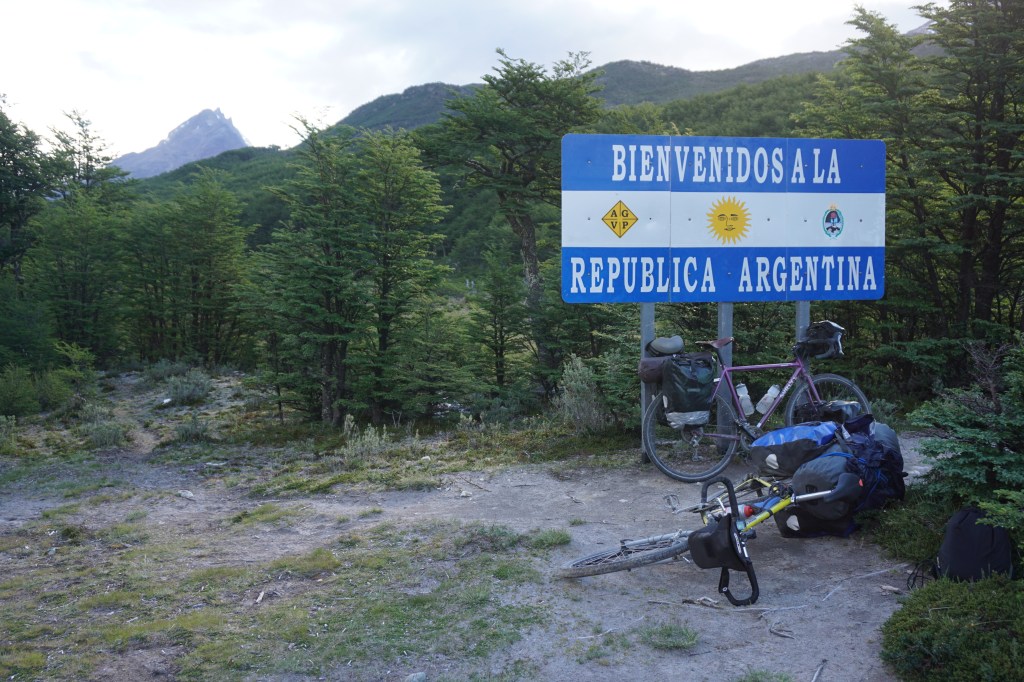
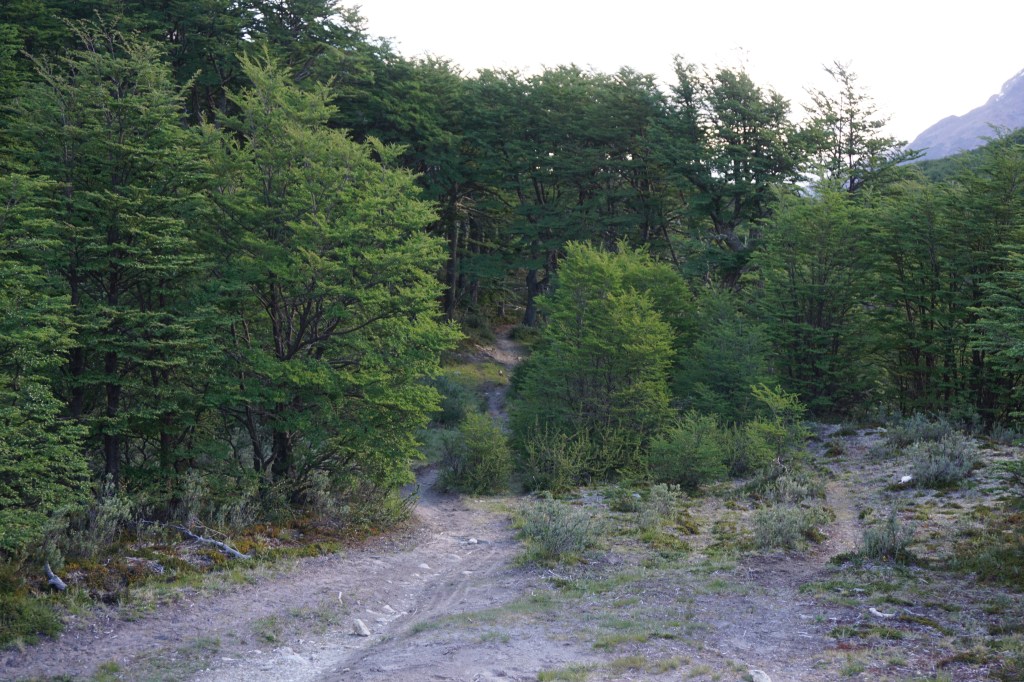
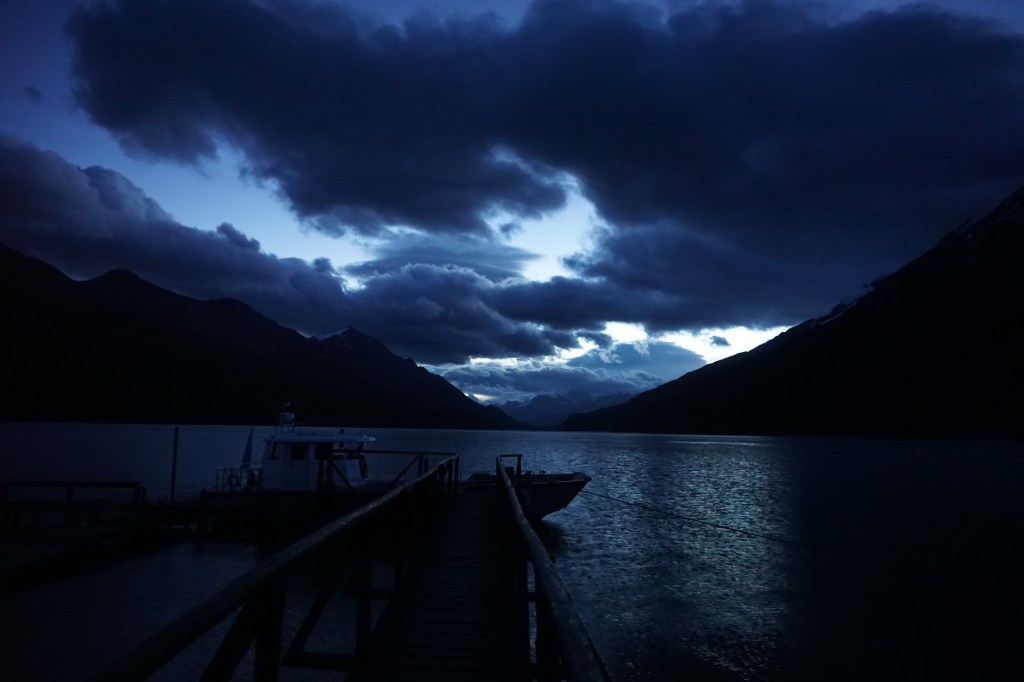
Day 16 (35 km, gravel): Last day on the bike from Lago del Desierto to El Chalten
Crossing Lago del Desierto requires a second, but relatively short, boat trip. If you are hiking it is possible to get around the lake, but from what I heard it is not advisable with a bike. After the boat ride there are only quite flat 35 km left to the next village in Argentinia, El Chalten. Compared to the villages along the Carretera Austral, El Chalten is quite touristic and mostly serves as starting point for hiking. I stayed at the „Patagonia Travellers Hostel“, which has nice common areas, dorms and single rooms. There I also met Arne again, the dutch guy I met at the beginning of my trip.
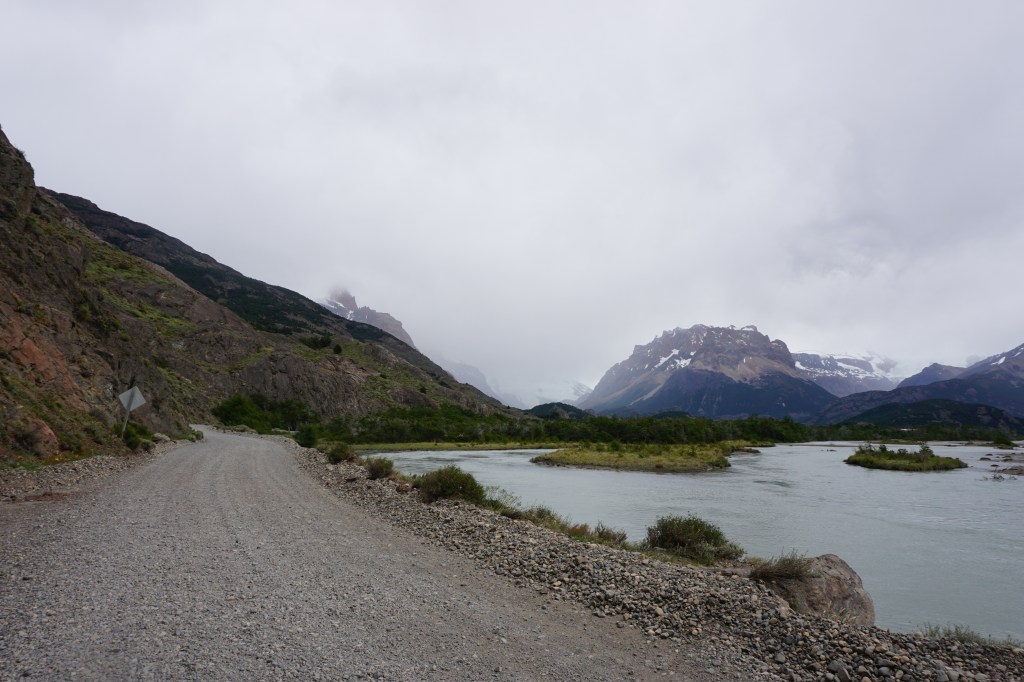
Days 17-22: Relaxing and hiking in El Chalten
After arriving in El Chalten I had 11 days left until my flight from Punta Arenas and thus several options for how to continue. These were mainly 1) continue cycling the remaining 700 km to Punta Arenas, 2) continue cycling and take the bus from somewhere in between or 3) stop cycling and take the bus. In the end I decided for option 3, mostly because I wanted to go for a hike with the group I met at the hostel in Villa O’Higgins. And after seeing the road to Punta Arenas later while in the bus I did not regret my decision. Not very scenic and very windy. So I sold my bike 50 USD, which was not too bad considering I bought it for 50 €, and went for a three day hike on the Cerro Torre and Fitz Roy route.
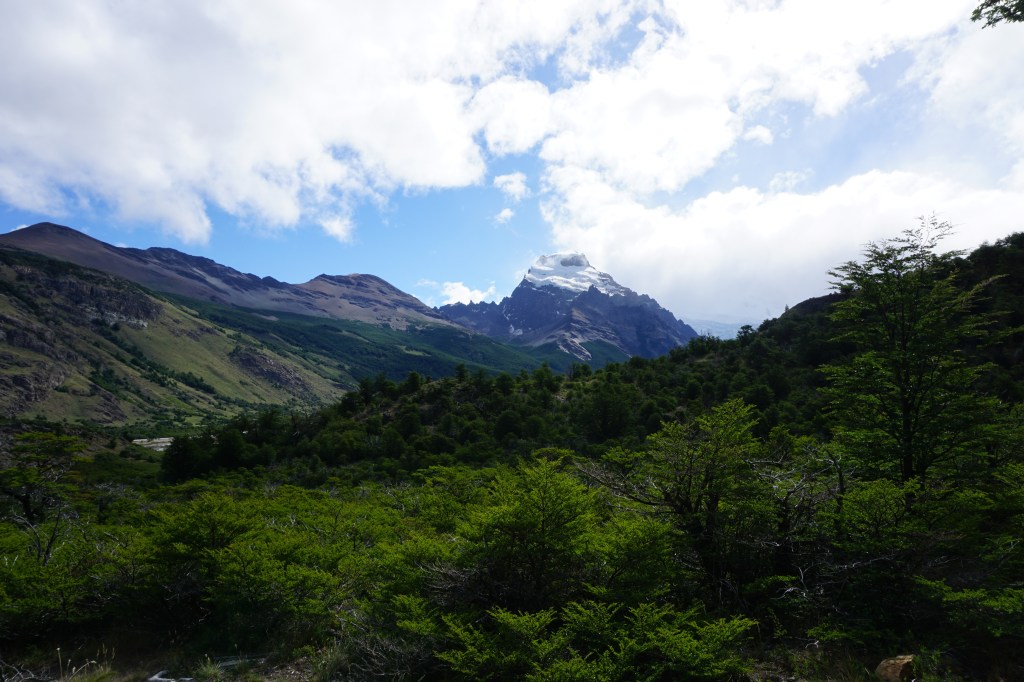

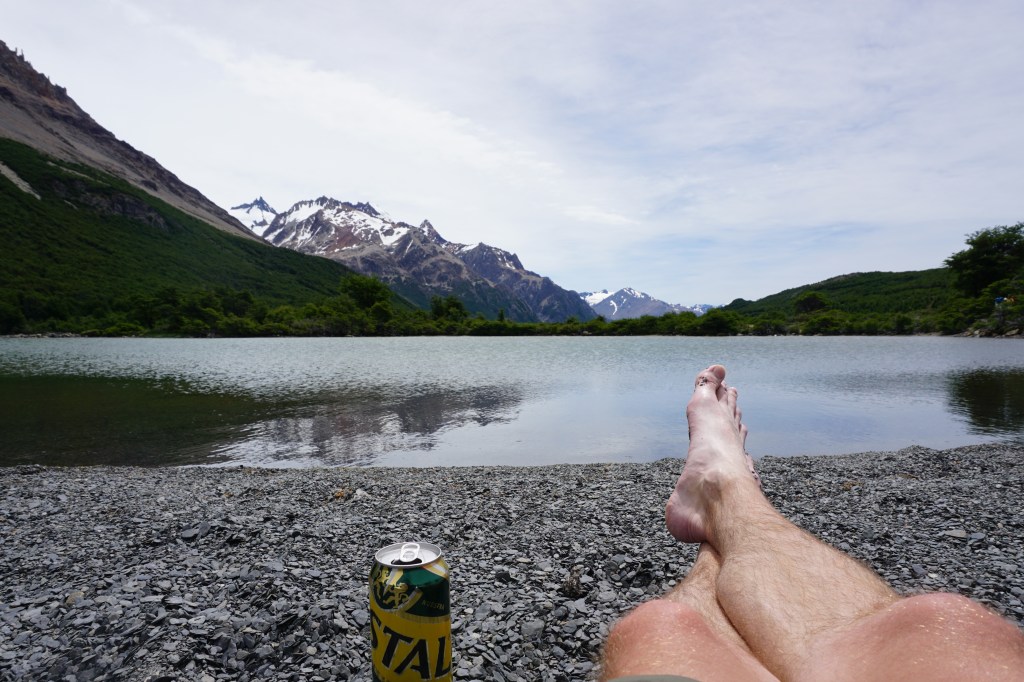
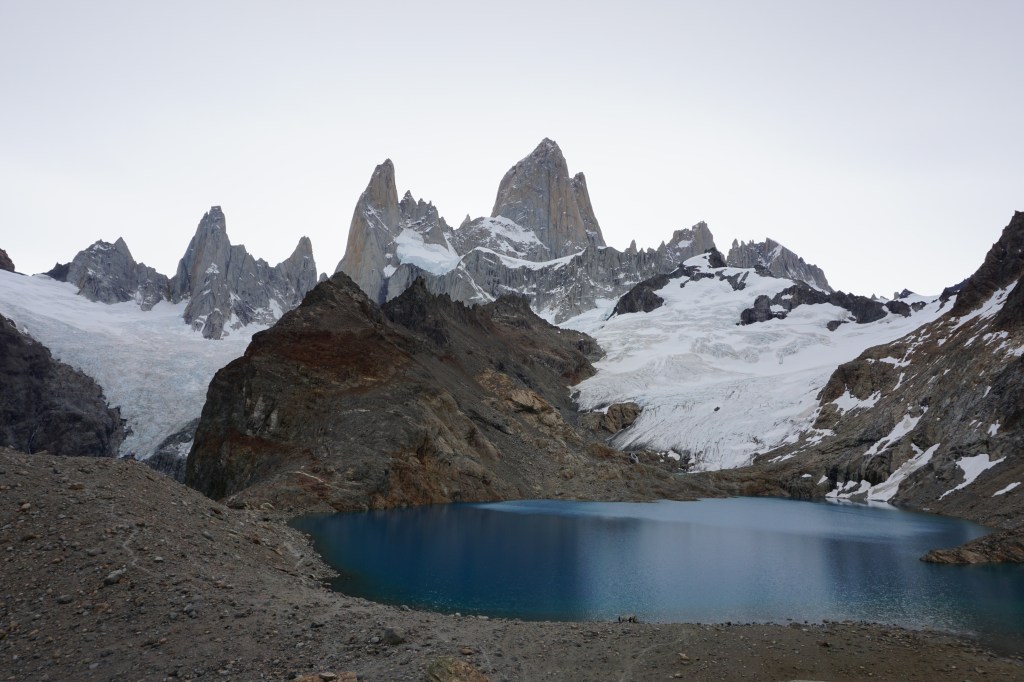
Days 23-28 (by bus): To the airport in Punta Arenas via Puerto Natales
After returning from the hike I still had 5 days until my booked flight from Punta Arenas, so I decided to do a few stops along the way. First day, I took a bus to El Calafate, where I stayed for one night. I wanted to go to Puerto Natales in one go, which overall is about 7h bus ride (I think around 3h to El Calafate and another 4h to Puerto Natales), but there was no bus going directly and taking an early bus and getting a connection in El Calafate may or may not have worked, so I took a later bus and stayed overnight. El Calafate is I think mostly known for trips to the Perito Moreno Glacier, but I did not go there. Next day I continued to Puerto Natales, where I stayed for 2 nights and went for a short 1-day trip to the Torres del Paine national park. Unfortunately, the weather was quite bad these days (basically raining nonstop), so I was quite happy I didnt choose to go for a multi-day hike. But since I did not reserve a camping spot I could not have went anyway.
The last bus ride to Punta Arenas was another 4-5h. There I stayed for another 2 nights. One day I was just walking around the town and relaxing, on my last day, since I had a late flight, I did one of these trips to the penguine island. Penguins are quite funny, but they make horrible noise constantly and it doesnt smell very good.
After flying back to Santiago I had a few days left to relax, before heading back to Europe.
 Dr. Johnsons Blog